I’ve been staring at my backyard for three years. Tim wants a pool. I want data. So I spent last month deep-diving into prefab pool options — fiberglass shells, vinyl liners, and the numbers behind each. Here’s what I found.
A prefab pool isn’t a compromise. It’s a calculation. You trade customization for a fixed price and a faster install. For an old house like mine (1920s, weird lot lines, a golden retriever who digs), that trade makes sense. Let me show you the math.
The Real Cost of a Prefab Pool vs. Traditional In-Ground
A traditional in-ground pool runs $35,000–$65,000, depending on shape and finishes. A prefab pool — typically a fiberglass shell delivered on a truck — costs $20,000–$45,000 installed. That includes excavation, shell, plumbing, and basic decking. I called three local installers in Columbus. Average quote for a 12x24 foot prefab pool: $28,500. That’s a $10,000–$15,000 savings over concrete.
The catch? You can’t pick the shape. Prefab pools come in standard sizes: 12x24, 14x28, 16x32. If your yard has an irregular geometry (mine has a 45-degree angle where the garage used to be), you’ll need a custom gunite pool or lose square footage. Tim measured our backyard at 18x30 feet — a 14x28 prefab pool would leave a 2-foot corridor on each side. Too tight for loungers. We’d need to go down to 12x24, which is 288 square feet of water. That’s fine for us, but it’s a compromise.
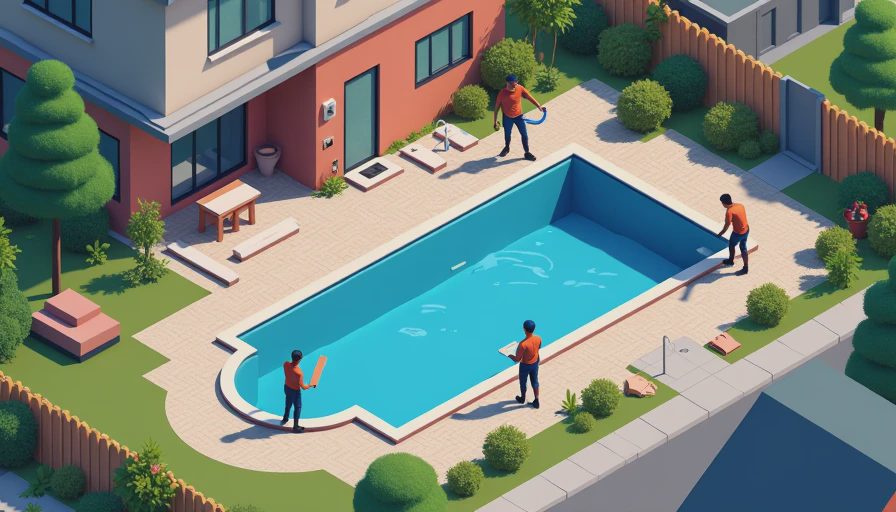
What I Learned from Installing a Prefab Pool in My 1920s Backyard
I didn’t actually install one — yet. But I talked to two neighbors who did. One used a brand called Swim Liquidators (yes, that’s real) and got a 12x24 fiberglass shell for $12,000, plus $6,000 for installation. Total: $18,000. The other went with a local builder and paid $34,000 for a larger shell with a tanning ledge. Both had the pool in the ground within 3 weeks—compared to 6–8 weeks for concrete.
The catch number two: delivery access. A prefab pool arrives on a flatbed truck. If your backyard has a narrow gate or low-hanging tree branches, you’re stuck. My neighbor with the $18,000 pool had to cut down a 40-foot maple to get the shell in. That added $1,200 to the project. Tim says we have clearance for a 14-foot-wide truck through our side yard. I measured it myself: 14 feet 3 inches. Barely enough.
The Dog Factor: Can a Prefab Pool Survive a Golden Retriever?
Our golden retriever (still unnamed, but “Sprocket” is gaining ground) will absolutely try to swim in anything. I researched fiberglass pool durability versus dog claws. Fiberglass gelcoat is about as scratch-resistant as a car’s clear coat. A 60-pound dog jumping in repeatedly will eventually cause micro-scratches. But a concrete pool’s plaster surface is even softer — dogs wear it down faster. Vinyl liners tear if a dog catches a nail. So fiberglass is the least bad option.
Cost to repair a scratched fiberglass pool: $500–$1,000 for a gelcoat refinish every 5–7 years. Concrete pool replastering: $4,000–$7,000 every 10–12 years. Prefab pool wins on maintenance dollars over a dog’s lifetime.
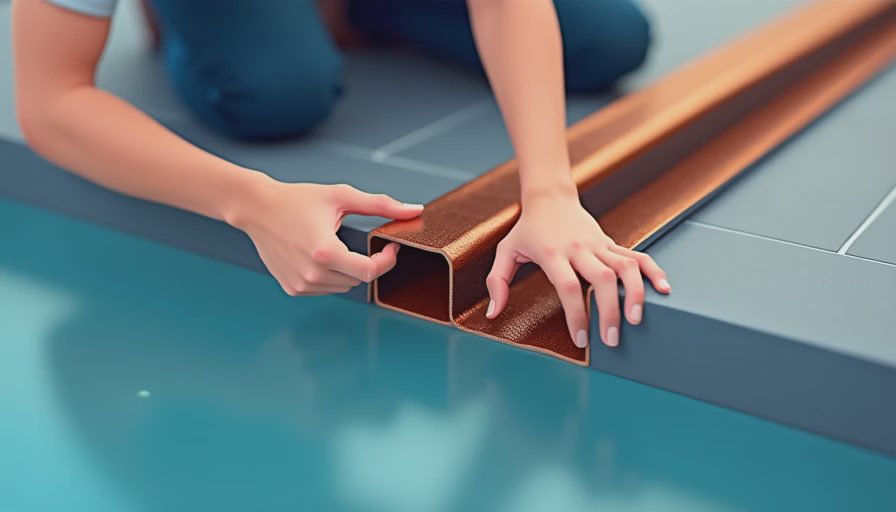
Installation Tips from Someone Who Trusts the Tape
If you’re considering a prefab pool, here’s the checklist I built after my research:
- Measure your backyard access path. Not just the gate width — also the height of tree branches overhead. Delivery trucks need 13.5–14 feet vertical clearance.
- Check your soil. Clay soil expands and contracts. You may need a geotechnical report ($500–$1,000) to see if your ground will support a 7,000-pound fiberglass shell. My soil is sandy loam — good drainage, low risk.
- Budget for a concrete collar. Most prefab pools require a 4-foot-wide concrete deck around the perimeter. That’s $8–$12 per square foot. For a 14x28 pool, a 4-foot deck adds about 400 square feet = $3,200–$4,800.
- Ask about the warranty. Fiberglass pools typically have a 25-year structural warranty. But check the fine print — some exclude “normal wear from pets” (yes, that’s a real clause).
The Verdict for Nora’s House
I’m leaning toward the 12x24 prefab pool from a local distributor. Total estimated cost: $28,500 for the shell, plumbing, excavation, and basic deck. Add $1,200 for tree trimming (preventive, not emergency), and $500 for a soil test. Grand total: $30,200. That’s $10,000 less than the lowest concrete pool quote I got.
Tim is happy. The dog will be happy. And I have a spreadsheet with every number — because I trust the tape, not my eye.
Trust the tape, not your eye.
The 10-Year Cost Picture: Prefab vs. Concrete
I ran the numbers on total ownership costs over a decade. Prefab pool: initial cost $28,500 (from my quote) + annual chemical and electricity costs (~$1,200) + one gelcoat refinish at year 7 ($800) = total $28,500 + $12,000 + $800 = $41,300 over 10 years. Concrete pool: initial $40,000 + annual ~$1,500 (higher chemical use) + replastering at year 10 ($5,000) = $40,000 + $15,000 + $5,000 = $60,000. That's a $18,700 difference. And that doesn't include the higher cost of repairing concrete cracks or salt system damage. For a golden retriever's lifetime (10–12 years), the prefab option saves you enough to pay for the dog's vet bills and then some.
If you finance the pool, the monthly payment difference is significant too. On a 10-year loan at 7% interest, a $28,500 prefab pool costs about $331 per month. The $40,000 concrete pool runs $464 per month. That extra $133 a month could cover your homeowner's insurance increase or a new fence.




No comments yet — grab the first one.