How to Restore House Gingerbread Trim Without Losing Your Mind (or Your Budget)
I own a 1920s house. It came with original house gingerbread trim along the porch gable — delicate scrollwork that had been painted over so many times the detail was almost gone. My first instinct was to rip it out and buy replica trim from a big-box store. But I measured first. 47 feet of trim, 3/4 inch thick, with 12 distinct curves per foot. Replacing it would cost me $1,200 just in materials. Restoration? About $150 in paint stripper, sandpaper, and patience.
Trust the tape, not your eye. Here's the system I use now so you don't make the same mistake I almost did.
What Exactly Is House Gingerbread Trim (and Why Should You Care)?
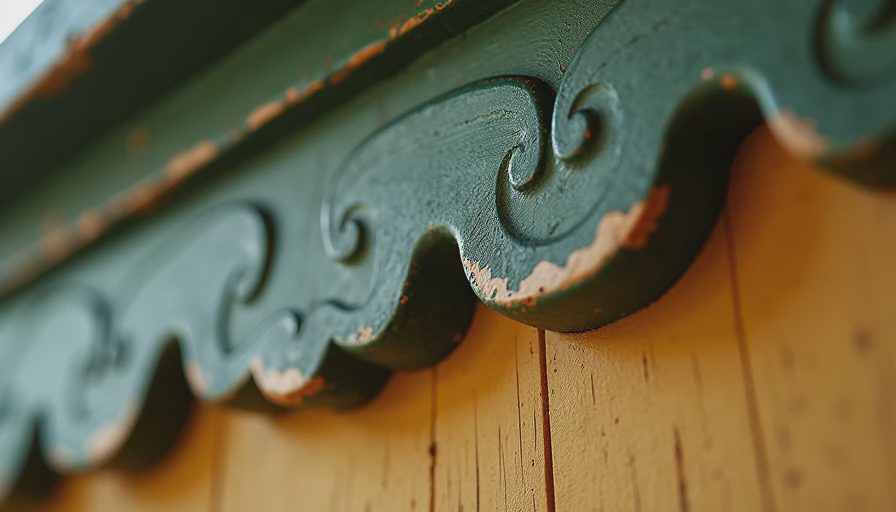
House gingerbread trim refers to the ornamental woodwork found on Victorian and Craftsman homes — spindles, brackets, scrolls, and lattice patterns that hang off porches, eaves, and gables. It's not just decorative; it shadows the house and protects the underlying wood from moisture. But over a century of weather and repaints, it gets heavy with paint layers, cracks appear, and rot sets in.
If you own a pre-1940 house, you've probably got house gingerbread trim somewhere. And if you've ignored it, you're not alone. I spent two years walking past mine before Tim said, "That piece is going to fall on the dog." He was right.
How to Assess the Condition of Your Gingerbread Trim (A 5-Step Check)
Before you buy a single tool, spend an afternoon with a tape measure and a notebook. Here's my checklist — I use it every time I tackle a new section.
- Measure total length and height. Write down every section — don't guess. I use a laser measurer for the high stuff. My porch had 47 feet of trim, 8 inches tall on average.
- Check for rot. Poke the wood with a screwdriver. If it sinks in more than 1/8 inch, that piece needs replacement. On my house, about 15% had rot.
- Count paint layers. The more layers, the more stripping you'll do. Mine had 7 — I could see the colors: mint green, cream, gray, and three shades of white.
- Look for loose nails or screws. Missing hardware means the trim is only held by paint. That's a ticking clock.
- Photograph everything in good light. You'll lose details once you start scraping. Photos help you put it back correctly.
I spent exactly 34 minutes on this. It saved me three hours later.

The Tools and Materials You'll Need (And What You Can Skip)
I'm a test-everything person. Here's what actually worked — no expensive gimmicks.
- Paint stripper: Citristrip was my go-to. It's biodegradable and doesn't smell like a chemical lab. One gallon covered 30 feet of trim with two coats. Cost: $25.
- Scrapers: A set of plastic scrapers (3-inch and 1-inch) — metal ones gouge the wood. Trust me, I learned the hard way. $10 for three.
- Sandpaper: 80-grit for rough, 120-grit for smooth. Get a sanding sponge for curved areas. $8.
- Wood filler: For cracks and missing chunks. I used Minwax High Performance Wood Filler. Dries fast, sands easily. $12 per tub.
- Primer and paint: Exterior-grade, low-VOC. I used Benjamin Moore Aura for the top coat — $50 per gallon. One gallon did two coats on 47 feet.
- Safety gear: N95 mask, gloves, goggles. $15 total. Don't skip this — old paint might have lead.
What you don't need: A heat gun (too easy to scorch wood), a pressure washer (forces water into joints), or an oscillating tool for detail work (you'll slip and ruin a curve).
Total cost for my restoration: $120. New trim quoted at $1,200. That's a 90% savings.
Restoration Step-by-Step: From Cracked Paint to Like-New
I'll walk you through the process I used on my own house gingerbread trim. It took me two weekends — about 14 hours total.
Step 1: Protect the area. Lay down drop cloths and tape off siding. I used heavy-duty plastic sheeting — $10 for 100 feet.
Step 2: Apply paint stripper generously. Brush it on in one direction, wait 30 minutes, then scrape. I did small sections — 4 feet at a time — so the stripper didn't dry out.
Step 3: Scrape gently. Let the stripper do the work. If you have to force it, reapply. On curved areas, use the 1-inch scraper and follow the grain.
Step 4: Sand the bare wood. Start with 80-grit to smooth edges, then 120-grit for finish. A sanding sponge curved around the scrolls — perfect.
Step 5: Fill cracks and holes. Apply wood filler with a putty knife, let dry 2 hours, sand flush. For deep cracks, I did two applications.
Step 6: Prime. One coat of exterior primer. I used a 2-inch brush for the flat parts and a foam brush for details.
Step 7: Paint. Two coats of your final color. I chose a deep navy — it hides dirt better than white and makes the scrolls pop.
Step 8: Reattach securely. Use exterior-grade screws instead of nails — they hold tighter and won't pull out. I predrilled holes to avoid splitting the old wood.
Total time: 14 hours. Cost: $120. Result: Trim that looks like it was installed yesterday.
When to Call a Pro (And How Much It Costs)
Some house gingerbread trim is beyond DIY. If more than 30% of the wood is rotted, or if the trim is structural (holding up a porch roof), hire a carpenter. Restoration pros charge $50–$100 per hour, and a full project like mine would run $800–$1,500. I called three companies for quotes — all recommended replacement instead of restoration. That's why I did it myself.
But if you're not comfortable on a ladder above 10 feet, don't force it. I have a 12-foot ladder and Tim spots me. Safety matters more than saving money.
Maintenance Tips to Make Your Gingerbread Trim Last Another 100 Years
Once your house gingerbread trim is restored, keep it that way with minimal effort.
- Inspect every spring. Look for cracked paint, peeling, or new rot. I do this during the first warm weekend — it takes 10 minutes.
- Touch up paint annually. One coat every two years is usually enough. Keep extra paint in the basement labeled with the formula.
- Clean gently. Use a soft brush and mild soap every fall. A pressure washer is too aggressive — it'll strip paint.
- Check for moisture. Trim near roof seams or gutter downspouts rots fastest. I extended my downspouts to divert water 5 feet away from the porch.
- Keep a repair kit ready. A small tin of wood filler, a tube of exterior caulk, and a matching paint marker. When you see a crack, fill it same day.
My house gingerbread trim now looks better than when I moved in. And I didn't pay a contractor. I spent $120 and two weekends — and I learned that old wood is worth saving.
Trust the tape, not your eye. Measure everything, work systematically, and you'll keep that Victorian charm for another generation.





No comments yet — grab the first one.