
I spent 45 minutes in Home Depot staring at two epoxy tubes. One had a 30-minute cure time, the other 4 hours. Tim walked over and said, "The wall is bowing. Buy the longer cure. It's stronger." He was right. That moment kicked off a deep dive into reinforcing foundation walls — a project I never thought I'd need until my 1920s house started talking back.
Reinforcing foundation walls isn't glamorous. It's not like picking out tile. But if you own an old house — especially one from before 1980 — it's the difference between a sound investment and a sinking one. I've now been through two reinforcements (one on my own house, one on a rental I owned), and I've got the spreadsheet to prove it. Let me walk you through the logic, the numbers, and the hard truths.
Why Your Foundation Walls Need Reinforcing
Concrete and masonry aren't immortal. Over decades, soil pressure, water damage, and simple age cause walls to bow, crack, or shift. A 1/4-inch crack might look small, but it's a sign of ongoing movement. I learned this the hard way when a hairline crack in my basement turned into a 3/8-inch gap over two years. Tim's civil engineering background was my saving grace — he explained that lateral pressure from saturated soil can push walls inward by as much as 2 inches before catastrophic failure. That's when I started researching reinforcing foundation walls.
Most houses built before 1960 have unreinforced concrete block or poured concrete walls. They rely solely on the weight of the soil and the floor joists to stay upright. That's not enough once drainage fails or tree roots grow too close. The fix? Adding steel beams, carbon fiber strips, or wall anchors to transfer the load back to stable ground. Each method has a cost profile and a specific application.

Signs It's Time to Act
You don't need a structural engineer to spot trouble — you need a tape measure and a level. The first sign is a bowing wall. Run a 4-foot level vertically along the wall. If you see a gap of more than 1/8 inch, start monitoring. Horizontal cracks are worse than vertical ones — they indicate shear stress. I once found a crack that ran the entire length of my basement wall. Tim said, "That's not cosmetic." He was right again.
Other clues: sticking doors or windows above the foundation, gaps between the floor and baseboards, or water seepage after heavy rain. A moisture reading above 20% on a concrete wall is a red flag. I keep a cheap moisture meter in my tool bag — it's saved me from ignoring problems twice. If you see any of these signs, don't wait. The cost of reinforcing foundation walls only goes up as the damage progresses.
Methods for Reinforcing Foundation Walls
There are three common approaches, each with a different price tag and timeline:
- Wall anchors — The most DIY-friendly solution if you have access to the exterior. Steel plates are bolted to the wall and connected to anchors buried in the soil outside. Cost: $2,500–$5,000 for a typical 8-foot section. I did this on my rental with a contractor — took two days.
- Steel I-beams — Installed inside the basement, bolted to the floor and ceiling. They brace the wall directly. This is Tim's preferred method for walls with more than 1 inch of bowing. Cost: $3,000–$8,000 depending on wall height and number of beams.
- Carbon fiber strips — Think of them as high-strength Band-Aids. They're bonded to the wall with epoxy and prevent further movement. Best for minor bowing (under 1/2 inch). I used these on my own house — $1,200 for a 10-foot section, plus a weekend of labor.
Each method has a place. The key is matching the severity to the solution. A contractor will charge an inspection fee ($300–$500) that's worth every penny. They'll also give you a written estimate for reinforcing foundation walls — always get three.
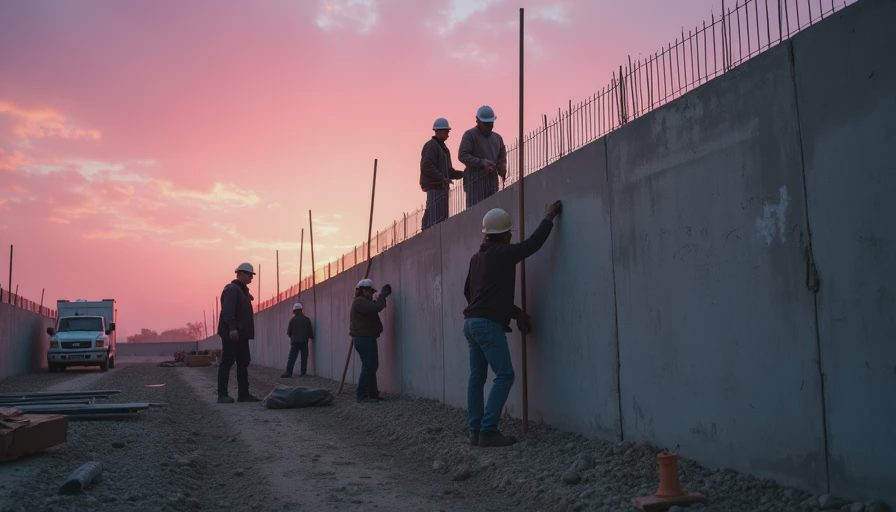
The Cost of Not Reinforcing
Delaying this project is expensive. A wall that bows another 1/2 inch can triple the repair cost. Worse, it can lead to foundation failure — which means a new foundation. That's $20,000–$50,000 and a months-long excavation. I know a homeowner who ignored a crack for five years. By the time they called a contractor, the wall had moved 2 inches. The quote for reinforcing foundation walls was $12,000 — but that was still cheaper than a full replacement.
Insurance rarely covers gradual foundation movement. Most policies exclude earth movement and settling. That means you're paying out of pocket. The best financial move is to catch it early. Add a line item to your home maintenance budget — $500–$1,000 a year for potential foundation work. It's cheaper than the alternative.
How to Budget for This Project
When I tackled my first reinforcing job, I created a 12-month savings plan. Here's the formula:
- Get three quotes — average them. That's your target number.
- Set a 10% contingency — because old houses always surprise you.
- Divide by 12 — that's your monthly savings goal.
For example, at $5,000 average, plus $500 contingency = $5,500. Save $458 a month. Doable for most homeowners in the $70k–$130k income range. Or finance it with a home equity line — but factor in the interest.
I also recommend watching for seasonal discounts. Many foundation repair companies are slower in winter. I saved 15% by scheduling my carbon fiber install in February. Always ask.
Reinforcing foundation walls is a numbers game. Measure the crack, calculate the cost, set the timeline, and act. Trust the tape, not your eye.