Prefabricated Walk In Shower: A Budget-Friendly Solution for Your Bathroom Renovation
I spent six years underwriting commercial real estate loans. If I learned one thing, it's this: the most expensive part of any renovation is the unknown. And in a bathroom remodel, the unknown lives in the shower. Tiling, waterproofing, custom glass — those costs add up fast. That's why, when I started planning my own bathroom reno, I went straight for the numbers. And the numbers kept pointing to one option: a prefabricated walk in shower.
If you're staring at a gutted bathroom and wondering how to get a clean, modern shower without a contractor's mortgage, you're in the right place. I spent three weekends measuring, comparing, and yes — calling Tim to question the load-bearing capacity of my bathroom floor. Here's the honest breakdown of what a prefabricated walk in shower costs, how it installs, and whether it's the right move for your old house.
What Exactly Is a Prefabricated Walk In Shower?
A prefabricated walk in shower is exactly what it sounds like — a shower kit that comes pre-manufactured, usually in a few pieces. The base is one solid piece (acrylic, fiberglass, or composite), and the walls are either one-piece or three-panel. You don't tile. You don't waterproof. You bolt it together and seal the seams. The whole thing is designed to be installed in a day or two.
I know — it sounds too good to be true. I thought so too. But after crunching the numbers on a custom tile shower ($4,000–$8,000, minimum), the prefab option started looking like a math problem with a clear winner. The average prefabricated walk in shower kit runs $500–$2,500, depending on size and material. Labor adds another $500–$1,500 if you hire someone. Total: $1,000–$4,000. That's roughly half the cost of a tile shower. And you don't have to wait three weeks for the mortar to cure.
The Real Cost Comparison — I Broke It Down by the Square Foot
Let me give you the raw numbers. I looked at three options for my own 36" × 36" shower footprint:
- Custom tile with a linear drain: $7,200 (including pan, tile, labor, glass door). That's $48 per square foot.
- Acrylic one-piece shower stall: $1,800 (kit plus a handyman install, no glass door — just a curtain). That's $12 per square foot.
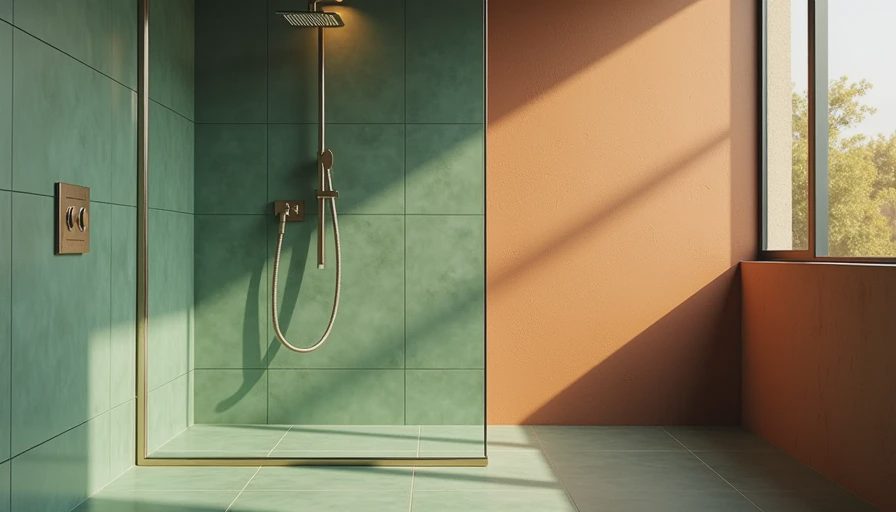
- Prefabricated walk in shower with a frameless glass enclosure: $3,200 (kit with a high-end base and glass door, plus professional install). That's $21 per square foot.
The middle option — the prefabricated walk in shower — gave me the look I wanted (no bathtub climb, easy entry, glass door) for a price that didn't make me question my life choices. I went with a brand called DreamLine, which hit the sweet spot of quality and cost. The base was solid, the wall panels snapped together, and the glass door had a magnetic seal that actually worked. No leaks, no grout to scrub, no regrets.
Installation — Can You Do It Yourself?
Maybe. I'm comfortable with a level and a drill, but I drew the line at plumbing. For a prefabricated walk in shower, the critical step is getting the floor perfectly level. The base has to sit flat against the subfloor, or you'll get cracks. I watched three YouTube tutorials, spent an hour with my spindle level, and then called Tim's brother who works in construction. He told me to shim the base and use silicone sealant — and to stop overthinking it.
If you're handy, you can install a prefab shower in a weekend. Brands like OVE Decors and American Bath Factory make kits with detailed instructions. But here's the thing: if you mess up the leveling or the drain connection, you're looking at water damage that costs more than the shower. I paid a plumber $250 to connect the drain and check my work. Worth every penny.
Professional installation runs $800–$1,500 for a prefab walk-in, depending on your area. That includes removal of old fixtures, leveling the base, mounting the walls, and installing the door. Compare that to a tile shower, where a good tile setter charges $15–$25 per square foot just for labor — plus the two-week wait. The speed of a prefab install is a huge advantage.
Durability and Maintenance — What You Need to Know
The common knock against prefabricated showers is that they look cheap. And sure, the $400 builder-grade stalls you see in apartments are flimsy and dated. But the mid-range prefabricated walk in shower models today are a different animal. A solid acrylic base is more durable than a tile floor with a pan liner. The walls are made from high-gloss acrylic or solid surface — they resist mold, don't need sealing, and clean up with a squeegee.
I have a golden retriever. She's not allowed in the shower, but her muddy paw prints find their way onto everything. A prefab surface is a dream — I spray it with a daily shower cleaner and wipe it down. No grout to scrub, no tile to reseal. My sister has a custom tile shower, and she spends every Sunday morning with a grout brush. I spend that time drinking coffee.
One thing to watch: the base can flex if it's not properly supported. Make sure your model has a reinforced base (some use fiberglass, some use a foam core). And always, always check the warranty. Most manufacturers offer a 10-year limited warranty on the base and walls. Keep the receipt. You'll never need it, but it's peace of mind.
Design Considerations — Making It Fit Your Old House
My house was built in 1920. The floors are not square. The walls are not plumb. That's a problem if you're installing a rigid one-piece shower unit. But a prefabricated walk in shower with separate wall panels gives you wiggle room. You can adjust each panel slightly to accommodate uneven walls, then hide the gaps with trim or caulk.
Size matters. Standard prefab walk-in showers come in 32" × 32", 36" × 36", 36" × 48", and 42" × 60". Measure your rough opening three times — yes, three — before ordering. Don't trust the builder's original plans. Trust your tape. I measured my space, found it 1/4" off, and ordered a slightly smaller base with an expansion trim kit. Problem solved.
My Final Recommendation — And the Numbers That Back It Up
If you're remodeling a bathroom on a budget and you want a clean, low-maintenance shower, a prefabricated walk in shower is the smartest choice. Here's my rule: if your budget is under $5,000 and you don't want to spend your weekends scrubbing grout, go prefab. If you have $8,000+ and you want a custom look with niche shelves and built-in seating, go tile.
For my house, the prefabricated walk in shower was the right call. It cost $3,200, took one weekend to install (with help), and it looks as good as the day we finished. No leaks, no cracks, no regrets. Tim still rolls his eyes when I pull out the tape measure — but he stopped questioning my numbers.
Trust the tape, not your eye.