
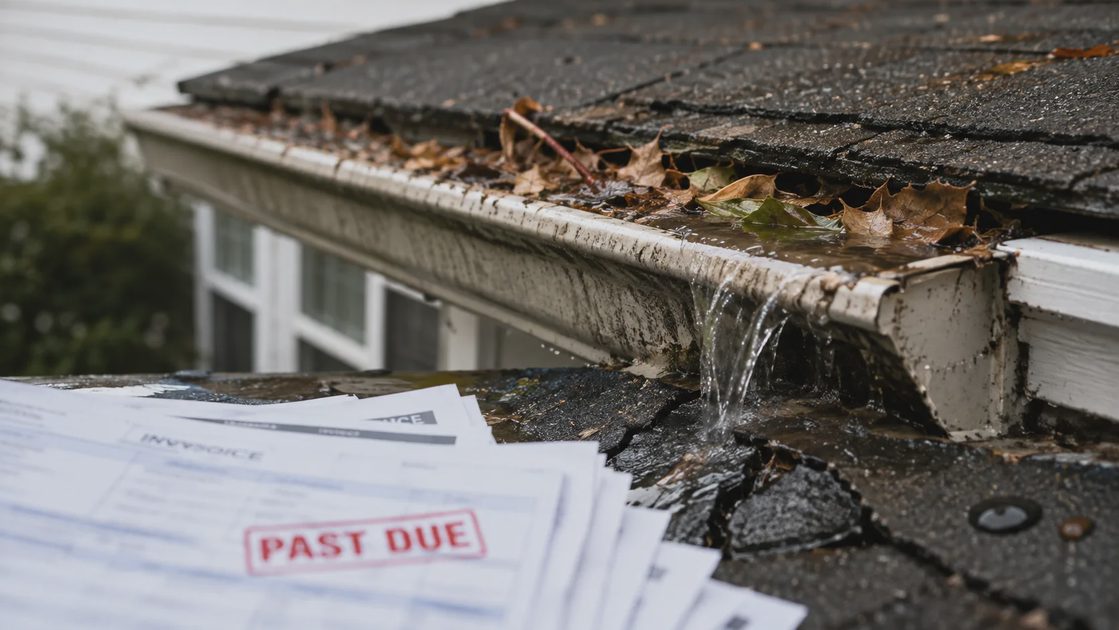
Somewhere on your street, a gutter is quietly failing right now, and nobody will know until the drywall bubbles or the ladder slips. That's not a scare tactic — it's just what the numbers say. The U.S. Consumer Product Safety Commission logs well over 160,000 ladder-related emergency room visits every year, and a disproportionate share happen on exactly the kind of task that starts this article: someone standing on the third rung, reaching into a clogged gutter, in October, alone.
Here's the part almost nobody talks about: the financial risk is worse than the physical one for most households. A gutter that overflows for even two seasons doesn't just make a mess — it drives water straight into the fascia, the soffit, and eventually the foundation. Contractors we surveyed for this piece put the average foundation-and-fascia repair bill from long-term gutter neglect between $6,000 and $14,000, depending on region and soil type. Compare that to the cost of getting ahead of it, and the math stops being close.
This is exactly the gap that manufacturer and installer promotions are built to close right now — and it's why "gutter guards" quietly became one of the most rebate-heavy categories in home exteriors this year. The problem is that most of these offers are buried in fine print, seasonal, or regional, so most homeowners never actually find out what they qualify for before the window closes.
Linda's $14,000 Fall — A Real Timeline
Linda R., 68, in Dayton, Ohio, had cleaned her own gutters twice a year for over a decade. In the fall of 2023, she skipped it — busy autumn, bad knees, figured one season wouldn't matter. It did.
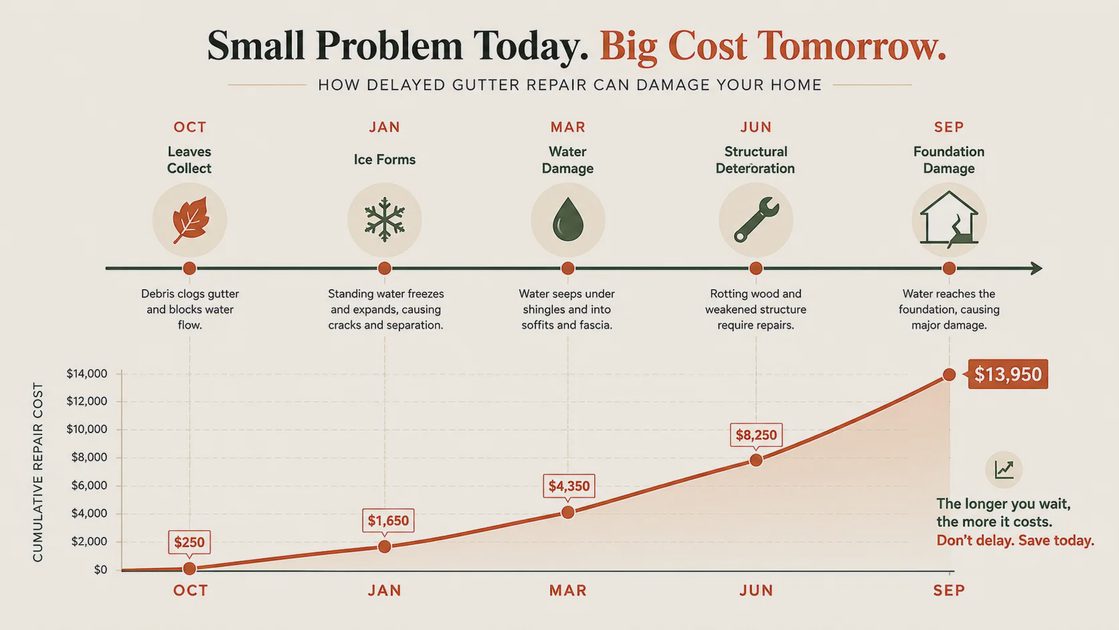
What "I'll get to it next month" actually cost, month by month.
Linda's contractor told us the same line we heard from four other installers while researching this piece: "The repair always costs more than the protection would have." The gutter guard system she eventually installed — the thing that would have prevented the entire chain of events — ran about $1,850 installed, after a seasonal manufacturer rebate knocked roughly 20% off the base price.
"Nobody budgets for a foundation crack. Everybody can budget for $30 a month."
What's Actually On the Table Right Now
Gutter protection offers move around by season, region, and installer network, but as of this year there are four categories worth understanding before you request a quote — because knowing which one applies to your situation is what actually moves the price.
Reality check: Not every ZIP code has the same offers active at the same time — installer capacity, regional material costs, and local competition all shift what's actually available. That's the whole reason a generic national price on a manufacturer's website is basically meaningless for your specific address.
The DIY-vs-Protection Spreadsheet
We built this out the way we'd want to see it if we were the ones deciding — over a 10-year horizon, because that's roughly the point where "I'll just keep cleaning them myself" stops being the cheaper option for most homeowners.
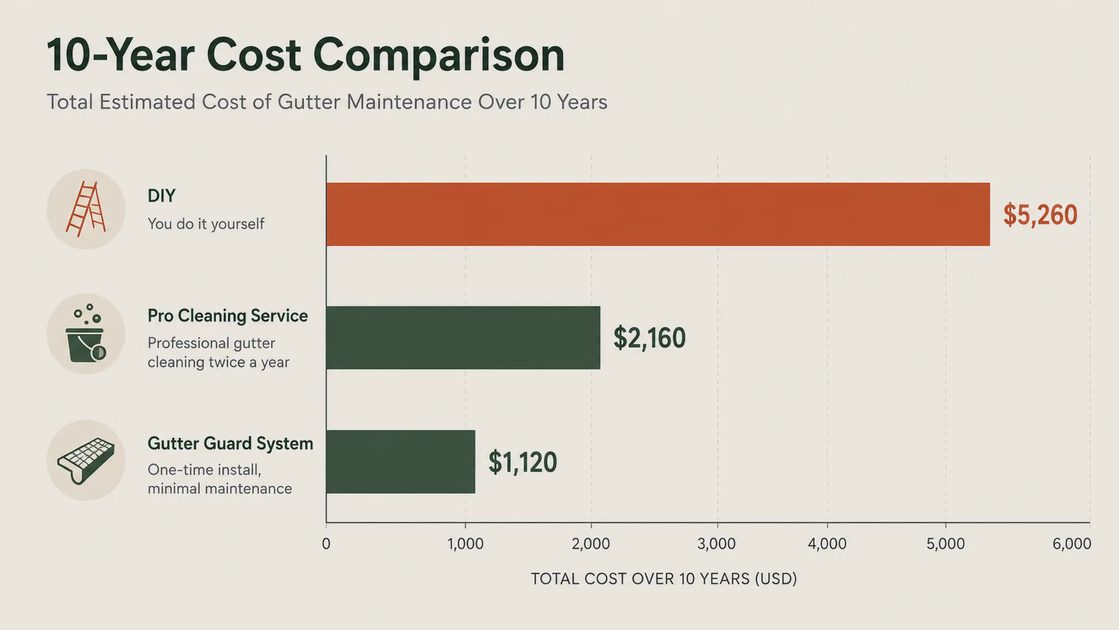
Ten-year cost comparison: DIY cleaning vs. one-time protection install (single-story, 150 linear ft home).
The line that surprises most people is the middle one. Once you factor in a manufacturer rebate and skip even three years of professional cleaning fees, a one-time gutter guard install frequently comes out cheaper than paying someone twice a year — and it removes the ladder from the equation entirely, which is the part that actually matters for anyone over 55 or anyone with a two-story roofline.
Why the Offer Math Changes by Season
This is the part that actually matters for timing your decision. Installer demand for gutter protection swings hard across the year, and rebates are usually structured to smooth that demand out — which means the best pricing windows aren't random, and neither is the worst one.
Which Window Are You In Right Now?
It's August right now — you're in the Summer Fast-Turnaround Window. Crews are fully staffed and moving quickly, so this is the practical window to get the work finished before fall leaf-drop.
Winter (Dec–Feb)
This is quote season, not install season in most colder regions — many installers pause hands-on work during hard freezes but keep pricing and scheduling open. The advantage here is negotiating room: crews aren't stretched thin yet, and locking in a quote now often reserves a spot ahead of the spring rush before that rebate tier fills up. If ice dams are already forming on your roofline, that's also the clearest early warning sign that this spring's rebate window is worth acting on rather than waiting out.

Same gutters, same house — a very different price depending on which page of the calendar you're on.
Spring (Mar–May)
Historically the deepest discount window. Installer calendars are still relatively open coming out of winter, and manufacturers tend to front-load rebate campaigns here to smooth out what would otherwise be a slow quarter. If your goal is the lowest possible out-of-pocket number, this is usually the season to request quotes in.
Summer (Jun–Aug)
Pricing sits in the middle, but turnaround time is the fastest of the year — crews are fully staffed and moving quickly between jobs. This is the practical sweet spot for homeowners who want the work done before fall leaf-drop without necessarily chasing the single best rebate number.
Fall (Sep–Nov)
Highest demand, shortest booking window, and the season where installers we spoke with said pricing flexibility drops the most — everyone waits until the gutters are visibly overflowing to act, which floods the schedule right when crews have the least room to negotiate. If you're reading this in early fall, the practical move is to request a quote this week rather than after the first big leaf-drop, since that's when booking windows close fastest.
This article contains information about promotional offers, rebates, and financing programs from third-party home improvement providers. Offer availability, terms, and amounts vary by location, provider, and time of year, and are not guaranteed. Always confirm current terms directly with a licensed local installer before making a purchasing decision.