A portable propane heater looks like a simple purchase until you are standing in a hardware aisle comparing BTUs, oxygen sensors, tip-over switches, and fuel canisters. I once spent 45 minutes choosing between two trash cans, so I understand how quickly a practical errand becomes a spreadsheet. A portable propane heater deserves more analysis than a trash can because the wrong model can waste fuel, crowd a room, or create a serious safety hazard.
My house was built in the 1920s. It has charming trim, three kinds of draft, and one furnace vent positioned as if the original builder had a personal grudge against warm feet. The right heater is not a replacement for a properly maintained central system, but it can provide targeted heat in a drafty room, workshop, porch, or emergency situation. Trust the tape, not your eye.
Start with the room, not the box
Before comparing brands, measure the space. A small bedroom, enclosed porch, and detached garage have completely different heating requirements. Write down floor area, ceiling height, window count, and whether the room is insulated. A 200-square-foot bedroom with closed doors needs less output than a 200-square-foot garage with a concrete floor and a roll-up door.
Most residential models list output in BTUs, often in a range such as 4,000 to 9,000 BTUs. Lower settings stretch fuel and reduce overheating. Higher settings help in a cold, leaky room but can make a compact space uncomfortable quickly. I use a simple starting point: select a model whose lower setting can maintain the room, rather than buying the largest unit because the package promises faster heat.
A portable propane heater with multiple heat settings gives you more control than a single-output model. That matters in an old house, where the temperature near an outside wall can differ sharply from the temperature beside the sofa. Tim calls this a thermal gradient. I call it the reason my dog sleeps in three different locations during winter.
Indoor approval and safety hardware
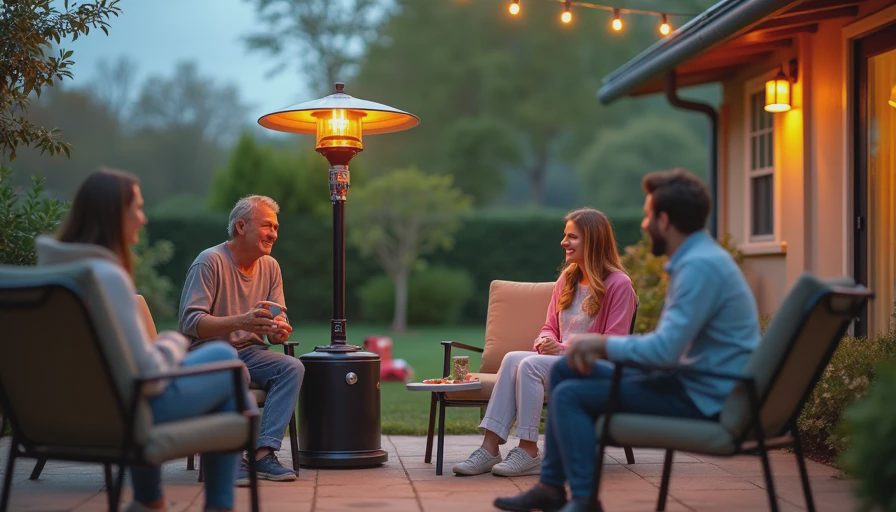
Never assume a fuel-burning heater is safe indoors because it is small. Look for clear manufacturer labeling that identifies the unit as approved for indoor use. Outdoor patio heaters and many construction heaters belong outside or in specifically ventilated work areas. Do not bring one into a bedroom, bathroom, tent, or enclosed porch unless the instructions expressly allow that use.
A portable propane heater intended for indoor use should include an oxygen depletion sensor and an automatic shutoff if the flame goes out. A tip-over switch is another useful layer, especially in a home with a dog, children, or a narrow walking path. These features do not cancel the need for ventilation, a working carbon monoxide alarm, and the clearances listed in the manual.
Keep combustible materials away from the heat source. That includes curtains, blankets, paper grocery bags, upholstery, cardboard boxes, and the basket of dog toys that somehow migrates six feet every night. Place the heater on a stable, level, nonflammable surface. Never use an extension cord with a propane heater that does not require electricity, and never modify the unit.
Before the first use, check the hose, regulator, cylinder connection, and surrounding floor. Apply only an approved leak-checking solution according to the instructions; never use a flame to search for a leak. If you smell propane, shut off the supply when safe, leave the area, and contact the appropriate emergency or gas service. Carbon monoxide has no smell, so a detector is not optional equipment in my house.
Tank size changes the math
Fuel cost depends on the cylinder, local propane pricing, heat setting, and how long the unit runs. A small one-pound cylinder is convenient but can become expensive if used daily. A larger refillable cylinder generally makes more sense for repeated use, provided the heater is approved for that connection and the setup follows the manufacturer’s requirements.
Check the expected runtime in the product manual instead of guessing from the tank’s size. A heater using more BTUs per hour will consume propane faster at its highest setting. For example, running a 9,000-BTU unit continuously can use substantially more fuel than operating a 4,000-BTU setting for short, scheduled periods. My preferred approach is to warm the room before use, reduce the setting, and close doors to unused spaces.
Storage also deserves a line item. Cylinders should be stored according to local fire and fuel-storage rules, away from ignition sources and excessive heat. Do not leave spare cylinders loose beside a radiator, furnace, or sunny window. A heater that costs $80 is not a bargain if the fuel-storage plan is unsafe or requires buying disposable cylinders every few days.
Match the heater to the job
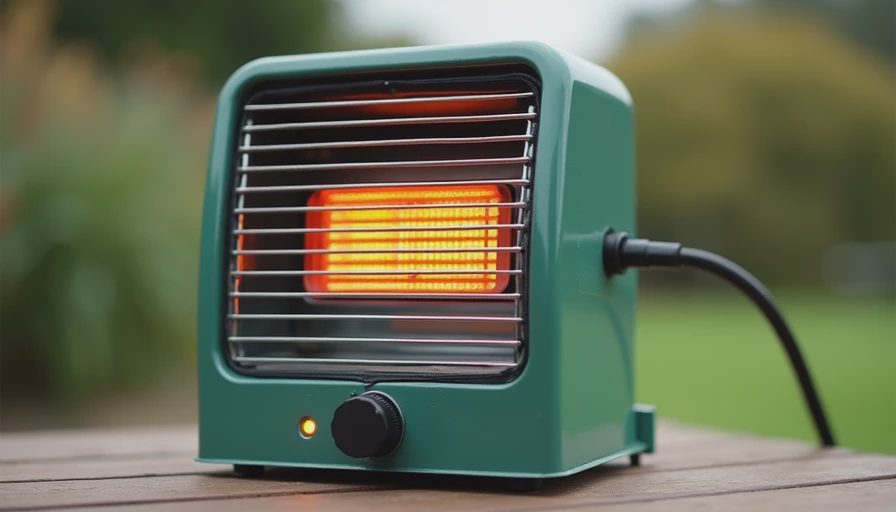
For a living room or bedroom, choose a listed indoor model with a stable base, adjustable output, and quiet operation. Radiant models warm nearby people and objects effectively, which is useful when you are reading in one chair instead of heating the entire house. Convection-style units distribute heat more broadly, but they still need proper clearance and ventilation.
For a garage or workshop, the answer is less obvious. Many garages contain gasoline, paint, sawdust, solvents, and other combustible materials. Some heaters are designed for construction or outdoor use only, and their exhaust or ignition systems are not suitable for an occupied room. Read the manual before assuming a garage is acceptable. Opening a large door may improve ventilation while destroying the heating calculation, so measure the real use case rather than the ideal one.
A portable propane heater can also serve as backup heat during a power outage, but it should not become an excuse to ignore furnace maintenance. Keep batteries for carbon monoxide alarms, a flashlight, gloves, and a phone charger in the same emergency bin. Heat is one part of outage planning; safe monitoring is the other.
My five-minute purchase checklist
I narrow the options with five questions. First, is the model explicitly approved for the intended location? Second, does it have automatic shutoff and oxygen-depletion protection where applicable? Third, can the lower setting heat the measured room without constant high-output operation? Fourth, are replacement cylinders, hoses, and regulators easy to source? Fifth, can I place it with the required clearance without rearranging furniture every evening?
Then I inspect the warranty, manual availability, and return policy. Established brands such as Mr. Heater and Dyna-Glo offer several portable fuel-heating products, but model specifications differ. Brand recognition is not a substitute for reading the manual. Look at the actual model number, fuel type, approved location, maximum output, and runtime details.
I also reserve $25 to $60 for practical accessories such as a carbon monoxide alarm, leak-checking solution, or approved hose, depending on the setup. That cost belongs in the purchase decision. A heater plus safety equipment is the real price.
The formula that prevents buyer’s remorse
Use this sequence: measure the room, identify the approved location, calculate a realistic heating schedule, price the fuel, and verify every required clearance. Choose the smallest suitable output range with useful adjustment—not the largest number on the package. Set up the heater on a stable surface, test the alarms, inspect connections, and supervise the first several uses.
My final filter is brutally practical: if I cannot explain where the fuel goes, where the heat travels, and what shuts the unit off, I do not buy it. A portable propane heater can be a sensible tool for an old, drafty house when the model and setup match the room. It is not decor, and it is not a shortcut around ventilation or maintenance. Measure twice, read the manual once more, and trust the tape, not your eye.