An inflatable pool sounds like a $100 solution to a hot summer. It can be—if you measure first. I once bought a patio table because it looked appropriately compact online. It blocked the back door, trapped the dog’s water bowl, and forced everyone to walk sideways. Tim said, “You own a tape measure.” He was right. The same mistake with an inflatable pool creates standing water, damaged grass, and a summer-long obstacle course.
My current system takes 20 minutes: measure the usable yard, identify drainage, calculate the filled weight, and budget for the accessories that keep the water clean. The pool itself is only one line in the spreadsheet.
Start with the footprint, not the advertised capacity
Retail listings usually show the outside dimensions, but the usable swimming area is smaller once the walls, filter fittings, and safety clearance are included. A 10-foot round inflatable pool needs more than a 10-foot circle. I allow at least 2 feet of clear space around the perimeter, plus another 3 feet on the side where the filter, ladder, or drain hose connects. That makes a practical planning diameter of roughly 14 feet.
For a rectangular model, measure both the length and width of the flat, usable surface. Avoid placing an inflatable pool directly beneath low branches, next to a fence that sheds splinters, or within reach of a basement window. In an old house, the yard may look level while the foundation side slopes subtly toward the wall. Use a long level or a straight board with a smaller level on top. If the difference is more than about an inch across the pool footprint, choose another location rather than trying to correct it with folded cardboard or loose soil.
The best site is usually firm, level ground with afternoon shade nearby—not overhead. Shade from a tree can cool the water, but falling twigs create punctures and clog filters. Trust the tape, not your eye.
Check the ground before adding water
Water weighs approximately 8.3 pounds per gallon. A 10-foot round inflatable pool with 2 feet of water can hold around 1,175 gallons, or nearly 9,800 pounds, before people climb in. That load is spread across the ground, but it still rules out a sagging deck, porch, balcony, or questionable section of patio.
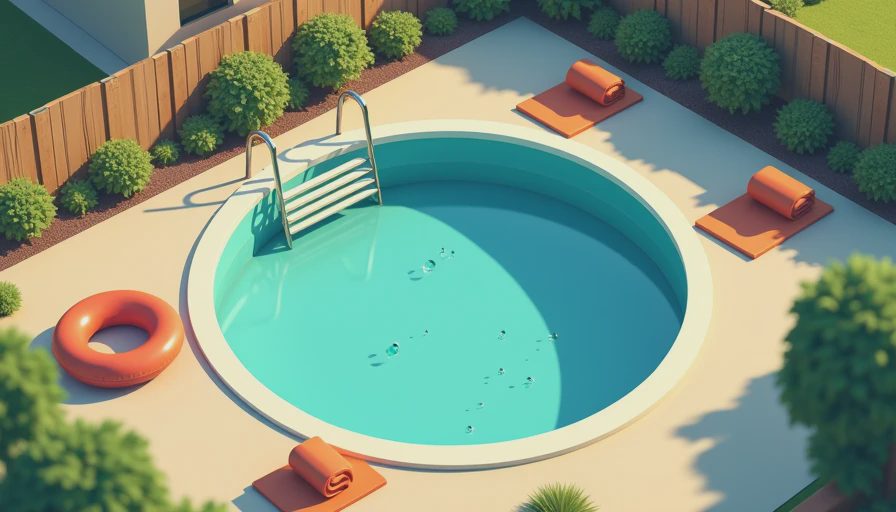
For a lawn installation, remove stones, acorns, sticks, and sharp roots. Do not assume a standard tarp solves every problem. A tarp protects the bottom from surface moisture and dirt, but it does not flatten a sharp rock underneath. I use a ground cloth sized slightly larger than the pool, then inspect the area by dragging my palm across it before inflating the ring.
An inflatable pool should sit on soil or concrete that drains away from the house. Never place it against the foundation where splash water can collect. Keep the drain outlet aimed toward a permitted lawn or garden area, not a neighbor’s property or a basement window. If you have a septic system, identify the tank and drain field before choosing a location; repeated saturation is a poor experiment for either.
Pick a size that matches real use
A small 8-foot inflatable pool is often enough for two adults cooling their feet or for supervised play. It uses less water, fills faster, and can fit in yards where a larger model would consume every walking route. Expect a smaller swimming area than the product photo suggests—those photos use wide-angle lenses and unusually cooperative children.
A 10- to 12-foot pool offers a better balance for a couple, a child, and a dog kept firmly outside the water. Larger framed versions can hold several swimmers, but the setup becomes a project: the filled weight rises sharply, the filter runs longer, and draining requires planning. For most older city lots, I prefer the middle size because it leaves a clear path from the back door to the garage.
The height matters as much as the diameter. A 30-inch wall is easier to enter but may be less suitable for young children. A taller inflatable pool holds more water and usually needs a sturdier ladder, a stronger filter, and stricter supervision. No pool is a substitute for active adult supervision, a secure cover, and local safety requirements.
Budget for the parts people forget
The low advertised price rarely represents the complete setup. Add a ground cloth, hand pump or electric pump, filter cartridges, water-testing strips, chlorine or another approved sanitizer, a cover, and a storage bin. A realistic first-season budget can land between $180 and $450 depending on size and whether a pump and filter are included.
A basic inflatable pool may cost $80 to $150, while larger models with pumps often run $250 to $600. Replacement filter cartridges can cost $10 to $25 per pair. Water treatment is usually cheaper than replacing cloudy water, but it requires consistency. Test the water according to the product instructions, remove debris with a net, and run the filter for the recommended hours rather than treating the pump like decorative equipment.
Keep a $30 repair kit nearby with vinyl patches, compatible adhesive, and a small towel. Patch a leak only after the surface is clean and dry. A slow leak that seems harmless can become a collapsed wall after several hot days.
Make maintenance fit your actual schedule
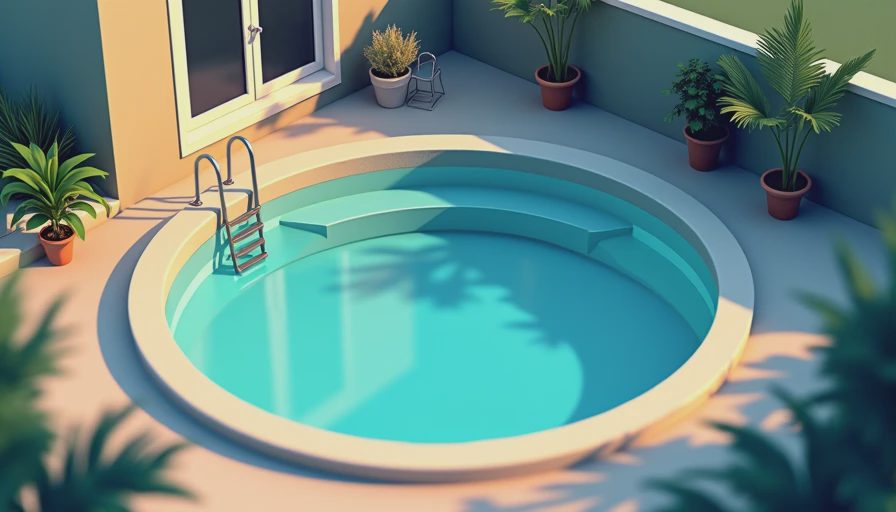
The most expensive pool is the one you stop maintaining after ten days. Before buying an inflatable pool, decide who will spend five minutes skimming leaves, checking water chemistry, and confirming the pump is running. I put the test strips in a labeled plastic container beside the back door. That removes the “where did we put those?” phase, which is where many routines go to die.
Use a cover whenever the pool is not in use. It reduces leaves, insects, and evaporation, but it is not a safety device unless specifically designed and secured for that purpose. Keep pets away from the pool and its fittings; a golden retriever’s enthusiasm is not a filtration system. Trim nearby plants, route electrical cords away from wet areas, and use an outdoor-rated outlet with appropriate ground-fault protection.
Drain and store the pool completely dry at the end of the season. Fold it loosely rather than forcing it into a tight box, and keep it off a damp basement floor. Moisture trapped in vinyl produces mildew before you have time to blame the weather.
A simple purchase formula
Measure the footprint, add 2 feet of clearance on every accessible side, and confirm that the resulting area is level and drains away from the house. Estimate water weight before considering a deck or paved surface. Then add roughly 30 to 50 percent to the advertised pool price for the ground cloth, cover, chemicals, replacement filters, and repair supplies.
For my 1920s house, the winning setup is a mid-size inflatable pool on level lawn, positioned far enough from the foundation for drainage and close enough to the hose bib that filling does not require a second career. It leaves a clear walking path, costs less to maintain than the oversized model, and can be packed away without surrendering the entire yard.
An inflatable pool is not effortless summer furniture. It is a temporary water system with a footprint, a load, and a maintenance schedule. Measure twice, budget honestly, and choose the largest model that still leaves your yard functional. Trust the tape, not your eye.