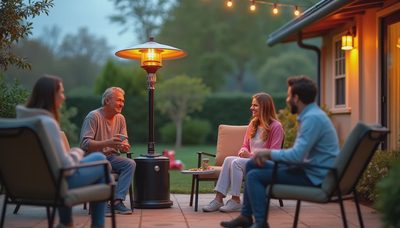
A propane heater indoor setup can solve a very specific problem: one cold room, one unreliable furnace, and a heating bill that appears to have been calculated by a hostile accountant. I have lived through all three. In my 1920s house, the upstairs bedroom once measured 58 degrees while the kitchen felt tropical. I considered moving a patio heater inside. Tim, my civil-engineer husband, looked at me over his coffee and said, “Absolutely not.” He was right.
The useful question is not whether propane heat works. It does. The useful question is whether the heater is designed for indoor use, sized for the room, installed with safe clearance, and operated with enough ventilation. Trust the tape, not your eye — and do not treat a fuel-burning appliance like a decorative lamp.
Start with the heater label, not the price
A propane heater indoor purchase should begin with the product label. Look for language such as “indoor-safe,” “indoor use,” or “vent-free,” and confirm the exact model in the manufacturer’s manual. An outdoor patio heater, propane construction heater, or portable torpedo heater is not automatically suitable for a living room. Outdoor units can produce combustion gases that require open-air ventilation, and bringing one inside can create a carbon monoxide hazard.
Common indoor options include portable radiant heaters and vent-free wall-mounted units. A small radiant model is often useful for a 100-to-300-square-foot room, while a larger unit may cover more space — but the stated rating is not a guarantee in a drafty old house. My plaster walls, leaky windows, and uninsulated floor can defeat a specification sheet in about twelve minutes.
Check for an automatic shutoff, tip-over protection, an oxygen-depletion sensor, and a listed certification mark such as UL or CSA where applicable. The manual should state minimum clearances, approved fuel, ventilation instructions, and whether the unit requires a regulator. If that information is missing, the $80 bargain is not a bargain. It is an $80 invitation to investigate a problem at 2 a.m.
Calculate room size and operating cost
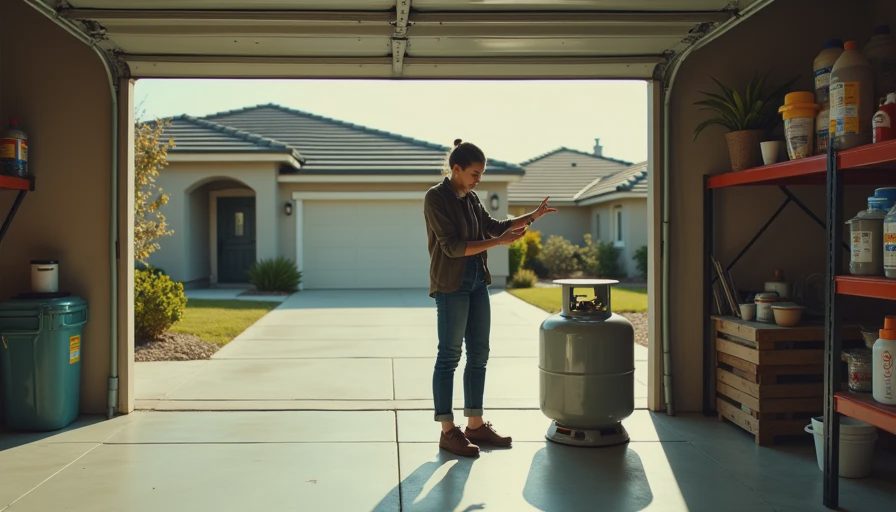
Before buying a propane heater indoor model, measure the room’s length and width. Multiply those numbers for square footage, then note ceiling height, window count, exterior walls, and obvious drafts. A 12-by-15-foot room is 180 square feet, but a 10-foot ceiling and three original windows increase the heating load compared with a modern, insulated room of the same floor area.
Portable heaters commonly list output in British thermal units, or BTUs. A lower-output setting can be more practical than running maximum heat continuously. Propane contains roughly 91,500 BTUs per gallon, though the usable heat depends on the heater and room. A one-pound cylinder is convenient for short use, but larger refillable tanks can reduce the cost per unit of fuel. Read the manual before connecting any cylinder; adapters and hose combinations are not universal.
Make a simple budget. Fuel might cost several dollars per pound-sized cylinder, while a larger tank refill can cost less per hour but requires storage and handling. Add the heater, approved hose, carbon monoxide alarm, and possibly a second smoke alarm. The realistic starting cost is often $150 to $400 for a portable setup with safety equipment — not the $39 headline price on a shopping page.
My spreadsheet has four columns: purchase price, fuel cost, room coverage, and replacement risk. The fourth column matters. A heater that saves $20 this winter but gets used beside a curtain, dog bed, or unstable side table is not economical.
Ventilation and carbon monoxide are nonnegotiable
Even a propane heater indoor product designed for residential use can affect indoor air. Fuel combustion consumes oxygen and produces water vapor, carbon dioxide, and potentially carbon monoxide when combustion is incomplete. Follow the manual’s ventilation instructions exactly. That may mean leaving a door open, cracking a window, or using the unit only in a room with a specified minimum air volume.
Install a carbon monoxide alarm on every level and outside sleeping areas. Test it monthly and replace batteries according to the alarm instructions. A carbon monoxide alarm is a backup, not permission to ignore ventilation. Symptoms such as headache, dizziness, weakness, nausea, confusion, or unusual sleepiness require immediate action: turn off the heater if safe, leave the building, call emergency services, and do not reenter until professionals say it is safe.
Never use a propane heater while sleeping, inside a tent or vehicle, or in a bathroom unless the manufacturer specifically permits that location and the required conditions are met. Do not use an oven or stovetop as a room heater. Those shortcuts are not clever winter hacks; they remove the safety margin entirely.
Map clearances around furniture and pets
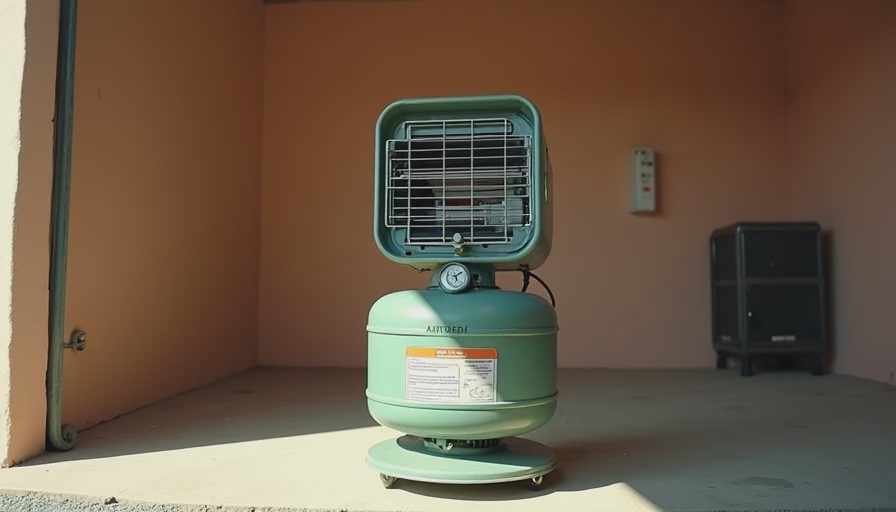
The correct propane heater indoor placement is a measured zone, not an approximate corner. Use the manual’s clearance numbers on every side, above the unit, and in front of the heat outlet. A common recommendation is to keep combustibles several feet away, but the manufacturer’s instructions control. Curtains, paper, blankets, upholstered furniture, cardboard, and plastic storage bins all count as combustibles.
For my house, I draw a rectangle on the floor with painter’s tape before the first use. The rectangle keeps the heater away from the sofa and gives the dog a boundary he cannot interpret as a suggestion. Place the unit on a level, solid surface where it cannot be knocked over. Do not put it on a chair, shelf, carpeted step, or improvised platform to aim heat upward.
Keep cords and hoses out of walking paths, protect the connection from impact, and do not allow children or pets to touch the controls. A golden retriever can turn a carefully measured room into a moving furniture experiment. A baby gate can help create distance, but it must not block ventilation or become close enough to heat dangerously.
Inspect fuel connections before each use
For a propane heater indoor setup, leak inspection is a routine, not a once-a-season ceremony. Before connecting a cylinder or tank, inspect the hose, connector, gasket, and cylinder valve for cracks, wear, corrosion, or a propane odor. Never use damaged parts, and never modify fittings to make mismatched equipment connect.
After connecting the fuel supply, follow the manual’s leak-test directions. A soapy-water solution can reveal bubbles at a connection; an open flame must never be used to test for leaks. If you smell gas, hear hissing, or see bubbles, shut off the supply if you can do so safely, extinguish ignition sources, leave the area, and contact the propane supplier or emergency services. Do not operate electrical switches while you are in the gas-filled area.
Store spare cylinders upright in a cool, ventilated location outside the living space, away from heat sources and ignition. Do not store them in a basement, enclosed closet, or near a furnace. Local fire rules and supplier instructions can be more restrictive, so follow both the product manual and local requirements.
My five-minute buying checklist
When I compare a propane heater indoor option, I use five checks. First, is it explicitly listed for indoor use? Second, does the output match the measured room rather than the largest number in the advertisement? Third, does it include tip-over protection, automatic shutoff, and an oxygen-depletion sensor where appropriate? Fourth, can I meet every clearance and ventilation requirement in the room? Fifth, can I place a carbon monoxide alarm where it will be heard from the sleeping area?
Then I price the complete system. A $120 heater plus a $30 alarm, $25 approved hose, and $40 in fuel is a $215 decision. I also photograph the model and manual, record the purchase date, and put a reminder on the calendar for inspection. Tim calls this excessive. I call it cheaper than replacing a smoke-damaged ceiling.
If the answers do not fit the room, choose an electric heater or repair the home’s primary heating system instead. A portable electric radiator may cost more to run in some areas, but it eliminates combustion inside the room. For a permanently cold zone, a licensed professional can evaluate insulation, ductwork, electrical capacity, or a properly installed heating appliance.
The formula is simple: measure the room, verify the listing, price the full setup, create the clearance zone, add carbon monoxide protection, and follow the manual every time. That is how I decide whether a propane heater indoor solution belongs in an old house — with numbers, not optimism.