A portable evaporative cooler sounds like the answer to a hot upstairs bedroom, a stuffy porch, or the room where your dog has claimed the only patch of hardwood. I understand the appeal. I also once bought a fan based on its attractive cream-colored housing, then discovered it sounded like a small airport at 10 p.m. Tim asked whether I had read the decibel rating. I had not. This is why we measure first and shop second.
An evaporative cooler lowers perceived temperature by passing air over water-soaked pads. The moving air feels cooler as water evaporates. That mechanism is useful, but it is not interchangeable with air conditioning. It works best in hot, dry conditions and becomes much less effective when indoor humidity is already high. In Columbus, Ohio, I treat one as a targeted comfort tool, not a replacement for central cooling.
What an evaporative cooler actually does
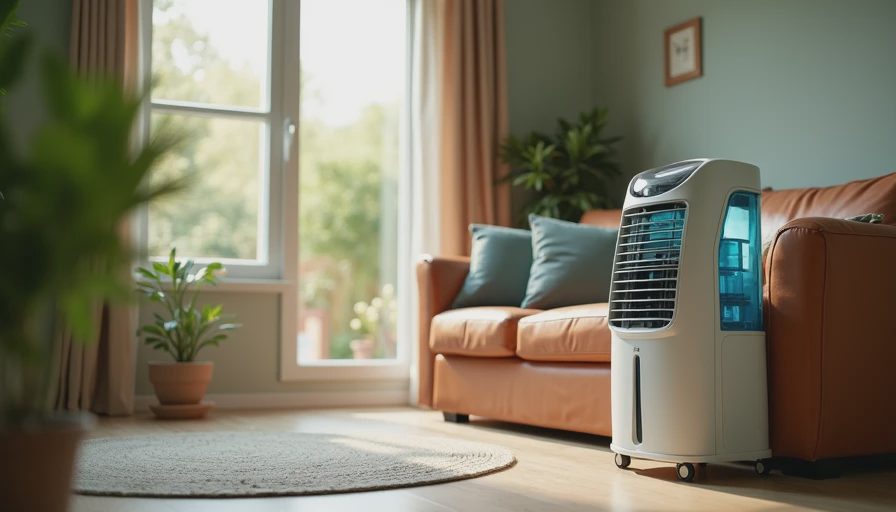
A portable evaporative cooler usually includes a water tank, a pump, cooling pads, and a fan. Depending on the model, it may offer low, medium, and high speeds, a timer, oscillation, and a small ice compartment. The tank might hold roughly one to five gallons, while airflow ratings can range from a gentle bedside stream to a much stronger output intended for workshops or patios.
The key distinction is humidity. An air conditioner removes heat and moisture from indoor air. An evaporative cooler adds moisture while cooling the air stream. In a dry climate, that added moisture can feel pleasant. In a damp room, it can leave the space clammy and deliver disappointing results. If your house has condensation on windows, a basement odor, or humidity that already feels heavy, this is probably the wrong appliance.
The cooling area on packaging also deserves skepticism. A model advertised for 300 square feet may perform well only with a nearby occupant, an open window, and low humidity. A closed bedroom with poor air movement is a different calculation. I use the listed coverage as an upper limit, then choose a unit for a smaller effective zone.
How to choose the right size
Start with the room, not the product photo. Measure length and width, multiply for square footage, and note the ceiling height. A 12-by-14-foot bedroom is 168 square feet with an eight-foot ceiling. That is a manageable target for a compact unit, but the result will depend on insulation, sun exposure, and whether the door stays open.
For a desk, reading chair, or dog bed, a small personal unit can be enough. These often cost about $35 to $90 and use modest tanks, but their airflow is narrow. A room-size portable evaporative cooler commonly falls between $80 and $220. Larger units can cost $250 or more, especially when they include stronger fans, larger reservoirs, or sturdier casters.
Do not buy the largest machine automatically. A bulky unit consumes floor space, needs more water, and can create an irritating draft. I leave at least 12 inches around the air intake and avoid placing the exhaust directly against a curtain. Trust the tape, not your eye — a unit that blocks a walkway is not a bargain at any price.
Noise is another measurement. Look for a published decibel rating if available, and read reviews specifically for sleep use. A low setting around a bedroom may be acceptable, while high speed can be too loud for phone calls or television. My practical test is simple: stand six feet away and decide whether I would tolerate the sound for eight hours.
Water, cleaning, and pet-proof placement
Water capacity determines how often you will refill the machine. A two-gallon tank might last through an evening on low, while high speed can consume water far faster. The exact runtime depends on humidity, fan speed, and pad condition. Before buying, check whether the tank lifts out easily. A narrow opening that requires a funnel is a maintenance problem disguised as sleek design.
Cleaning matters because standing water and damp pads are not decorative features. Empty the tank when the cooler will sit unused, wipe accessible surfaces, and follow the manufacturer’s instructions for pad replacement. Hard-water areas can leave mineral deposits that reduce airflow. I keep a measuring cup beside the utility sink and use it to refill without carrying a full reservoir across the hardwood floor.
With a dog, placement becomes a small engineering project. Keep cords behind furniture or use a cord cover, and place the unit where a wagging tail cannot knock it over. Skip the ice compartment if your dog treats every unusual appliance as a personal challenge. The goal is a cooler that stays upright, dry outside, and boring to investigate.
Portable evaporative cooler versus a fan or air conditioner
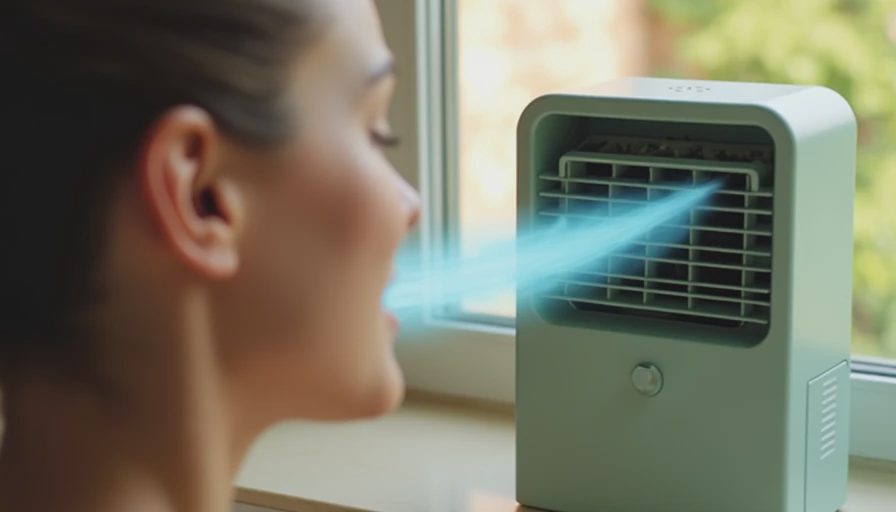
A fan is cheaper and simpler. It does not lower room temperature, but it can improve comfort by moving air across skin. A basic box fan may cost $25 to $60, and there is no tank to clean. If your room is already cool at night, a fan may solve the problem with less ownership hassle.
A window or portable air conditioner provides more dependable cooling in humid weather, but it costs more to purchase and operate. Portable air conditioners also require a window kit and produce exhaust heat that must be vented outdoors. For a single hot office, a portable evaporative cooler can be the reasonable middle option when the climate is dry and the window can remain slightly open.
Electricity cost depends on the unit’s wattage and your utility rate. A small fan-style cooler drawing 50 to 100 watts generally costs less to run than a portable air conditioner drawing several hundred watts or more. The purchase price is only half the spreadsheet; include filters or pads, replacement water, cleaning supplies, and the value of your time.
A five-minute buying formula
My buying formula has five steps. First, measure the room and identify the actual cooling zone. Second, check the local humidity pattern rather than relying on a dry day in the forecast. Third, compare tank size with your willingness to refill it. Fourth, confirm noise, footprint, cord length, and cleaning access. Fifth, set a total budget that includes a replacement pad.
For example, a 160-square-foot upstairs bedroom in a dry area might justify a $120 to $180 portable evaporative cooler with a two- to four-gallon tank. A humid 160-square-foot bedroom may be better served by a quiet fan or a properly sized air conditioner. The cheaper product is not the cheaper solution if you stop using it after three uncomfortable nights.
I also photograph the product dimensions before ordering and mark the footprint on the floor with painter’s tape. This catches the classic mistake: buying something that technically fits but makes the dresser drawer impossible to open. Tim calls this excessive. Tim also once installed a shelf upside down, so his position is under review.
The practical verdict
A portable evaporative cooler earns its floor space when you need directed comfort, live in a relatively dry climate, and can commit to routine cleaning. It is especially useful for a reading corner, home office, covered porch, or bedroom occupant who wants a cooler air stream without cooling the entire house.
Skip it when humidity is high, the room must remain sealed, or nobody in the household will refill and clean the tank. In those situations, choose a fan for inexpensive airflow or an air conditioner for actual temperature and moisture control. Product photos cannot answer that question; your room measurements and climate can.
The final rule is uncomplicated: measure the room, measure the machine, estimate the water routine, and then compare the total cost with a fan or air conditioner. If the numbers still work, buy the quietest model that covers your real zone rather than the biggest model on the shelf. Trust the tape, not your eye.