I spent one Saturday and $186 trying to create easy landscaping around my 1920s house. The result was three undersized shrubs, one badly placed hosta, and a garden bed that looked like a comma. Tim, my civil engineer husband, asked where the water would go. I did not have an answer. The next rain supplied one.
That failure gave me a useful rule: easy landscaping is not about buying fewer plants. It is about removing decisions before you reach the garden center. Measure the site, observe the sun, solve drainage, and choose plants that can survive your actual level of enthusiasm. A pretty plan that requires daily watering is not easy. It is a part-time job wearing mulch.
Start with a one-page site plan
Before buying anything, sketch the front and side yards on graph paper. Mark the foundation, walkways, downspouts, utility covers, mature trees, gates, and areas where the dog runs. Use one square to represent two feet, or whatever scale lets the entire property fit on one page. Accuracy matters more than artistic talent. My first drawing looked like a nervous subway map, but it showed me that the proposed bed would block the basement window.
Measure the length and width of every planting area. For a rectangular bed, multiply length by width to get square footage. A 4-by-12-foot bed is 48 square feet. At a 3-inch mulch depth, that is roughly 1.2 cubic yards, depending on how the supplier calculates coverage. Ordering 2 cubic yards creates a small leftover pile; ordering half a yard creates a second delivery fee. This is where easy landscaping becomes cheaper than improvisation.
Also track sunlight for one ordinary day. Label spaces as full sun, part shade, or shade rather than guessing from a single afternoon. Morning light and intense western exposure produce different conditions. Old houses often cast complicated shadows because porches, additions, and mature maples sit close together.

Use repetition instead of a plant collection
My most expensive landscaping mistake was treating the front bed like a plant museum. I bought nine different perennials because each tag looked persuasive. Nine individual plants created visual noise, while three groups of the same plant would have looked intentional and cost less to maintain.
For easy landscaping, choose a short palette: one small tree or anchor shrub, two reliable structural plants, and one seasonal accent. Repeat plants in groups of three, five, or seven when the space allows. Repetition does the design work. It also makes replacement simple because you can identify the plant without consulting a phone photograph from four years ago.
For an older home, consider dependable options such as inkberry holly, serviceberry, hydrangea, catmint, coneflower, sedge, or creeping thyme, but match every choice to your region, soil, drainage, and light. I like native plants because they are often better adapted to local conditions, not because the word native magically cancels maintenance. A thirsty plant in the wrong location remains thirsty.
Buy fewer plants at a size that fits the budget, then allow space for mature width. A $22 shrub planted 18 inches from the foundation can become a $200 removal project. Read the mature dimensions on the tag and place the center of the plant at least half its mature width from walls, paths, and windows.
Make water do the work
Water management is the unglamorous part of easy landscaping, which is why people skip it and then blame the plants. Check every downspout during a storm. Water should move away from the foundation, not collect beside it or discharge directly onto a narrow planting bed. A basic downspout extension can cost $10 to $30 and prevent soil erosion that would otherwise wash mulch onto the sidewalk.
Keep soil below siding and avoid covering the foundation vents. Do not pile mulch against wood, trim, or tree trunks. Two to three inches is usually enough for a bed; more is not automatically better. Thick mulch can hold excess moisture, hide pests, and encourage shallow roots. Leave a small gap around trunks and stems so the base can dry.
For a sloped yard, use gentle curves, low planting terraces, or dense ground cover instead of trying to make every bed perfectly level. Tim immediately objected when I suggested stacking retaining-wall blocks without checking the slope. He was right. Small decorative walls can still fail if water has nowhere to go.
Build the budget before the shopping trip
A reasonable starter budget for a small front-yard refresh might look like this: $60 to $120 for compost and soil amendments, $80 to $180 for mulch, $150 to $300 for shrubs and perennials, and $40 to $100 for edging or basic tools. That puts a modest project around $330 to $700, excluding professional grading, tree removal, irrigation, or masonry.
Price the project by bed, not by shopping cart. For each area, record square footage, plant quantity, mulch volume, edging length, and delivery cost. Add a 15 percent contingency for broken tools, extra soil, or the inevitable plant that was labeled incorrectly. If the total is too high, reduce the number of beds before reducing soil preparation. One finished bed looks calmer than four half-funded beds.
Easy landscaping also benefits from a maintenance budget. Set aside money for pruners, hose fittings, replacement plants, and a soil test. A basic soil test is usually less expensive than repeatedly buying plants that dislike the pH. Spend first on infrastructure: drainage, accessible water, quality soil, and clear paths. Decorative gravel and ceramic pots can come later. I say this as someone who owns too many ceramic pots.
Choose pet-friendly circulation
A beautiful yard that fights your dog is a failed floor plan. Watch the route your pet already takes between the door, fence, water bowl, and favorite sniffing location. Preserve that route with a durable path or open strip. Dogs create shortcuts whether the plan approves or not, and bare soil in a shortcut becomes mud in October.
Use sturdy edging that will not become a sharp obstacle or trap a paw. Avoid placing delicate plants at the inside corners of gates, where a running dog will test your optimism. Thorny shrubs can provide security, but they are poor choices beside a narrow path used by children, pets, or anyone carrying groceries.
Leave enough clearance to mow and trim without hand-weeding every inch. A 24-inch access gap is more useful than an extra row of plants. If you cannot reach the center of a bed without stepping into it, the bed is too wide for low-maintenance care. Trust the tape, not your eye.
A repeatable weekend installation formula
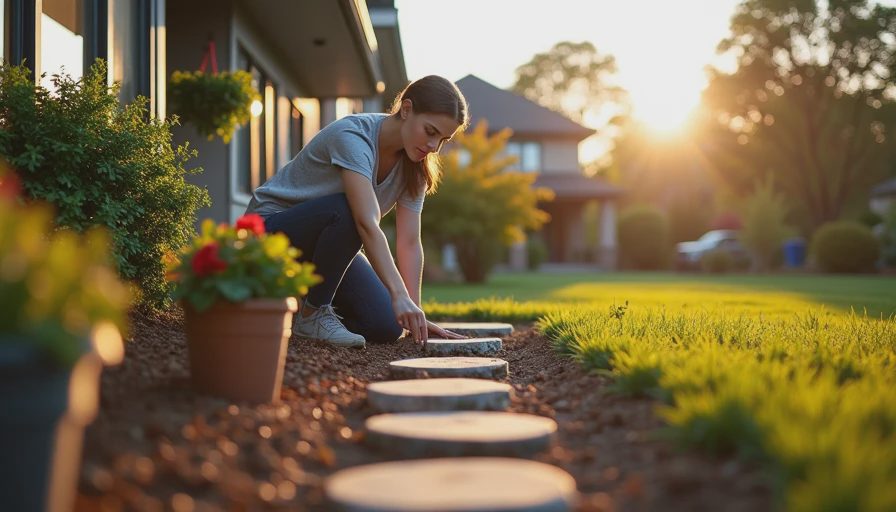
Use this sequence for easy landscaping: measure on Friday, mark the beds with a hose on Saturday morning, and live with the outline for 48 hours. Walk around it with a mower, trash bin, leash, and grocery bags. If the curve still works, remove sod, improve the soil, install the path or edging, plant the largest elements first, and finish with mulch. Water thoroughly at planting, then follow the specific needs of each plant rather than using a fixed calendar.
Work in sections no larger than you can finish in one weekend. A 40-square-foot bed is a sensible first test because it is large enough to matter and small enough to correct. Photograph the finished area from the street, not just from six feet away. The street view reveals gaps, blocked windows, and proportions your eyes ignore while kneeling in the dirt.
The formula is simple: measured area plus compatible plants plus controlled water plus realistic maintenance equals easy landscaping. You do not need a complete yard in one season. Start with the problem that creates the most work, document the cost, and repeat the process. Your house has already survived decades of questionable decisions. Give the next one a spreadsheet.