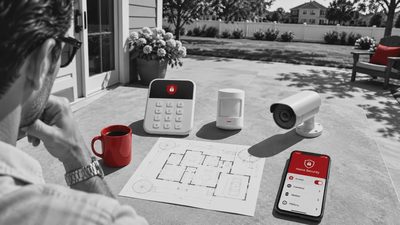
I spent 45 minutes comparing two trash cans and then bought neither, so I approached SimpliSafe with a tape measure, a spreadsheet, and the suspicion that “easy setup” usually means “easy until the wall is 1920s plaster.” I wanted to know whether this security system makes practical sense for an old house with a dog, uneven floors, and a budget that still has to cover a leaking basement window.
The short version: SimpliSafe is a sensible option when you want professional monitoring without a complicated installation contract. It is not magic, and it is not a substitute for repairing a loose back door. But the equipment is modular, the setup is approachable, and the monthly cost is easier to understand than many traditional alarm packages.
What SimpliSafe actually costs
A basic SimpliSafe package commonly starts in the low hundreds, while a larger setup with entry sensors, motion sensors, a keypad, cameras, and a siren can reach roughly $400 to $700 before promotions. The exact bundle changes, so I would price the individual parts rather than assume the biggest kit is the best value.
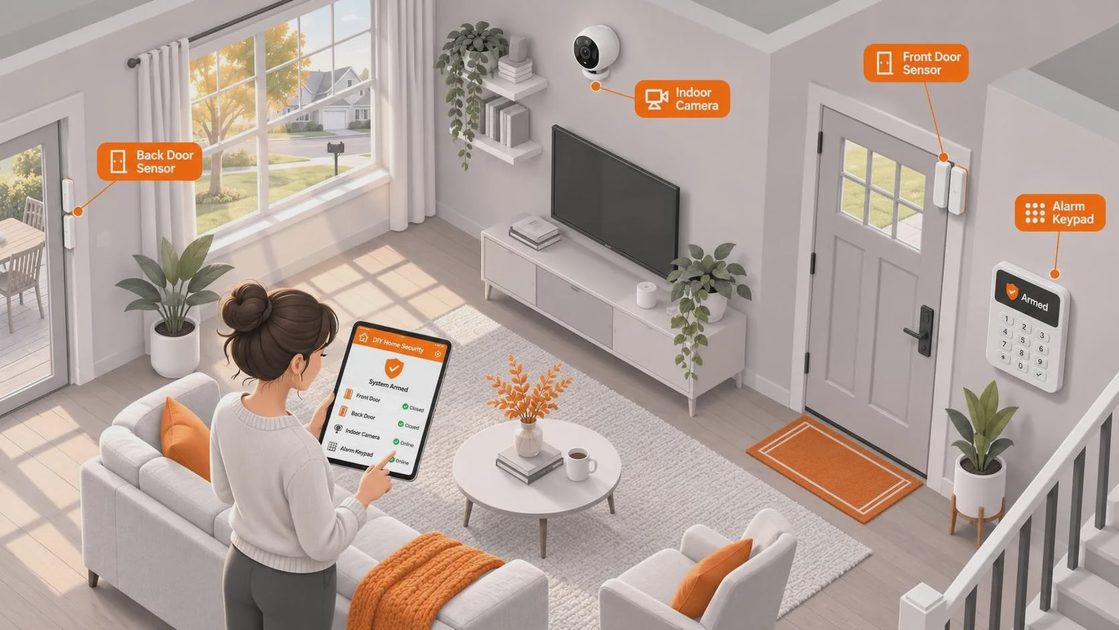
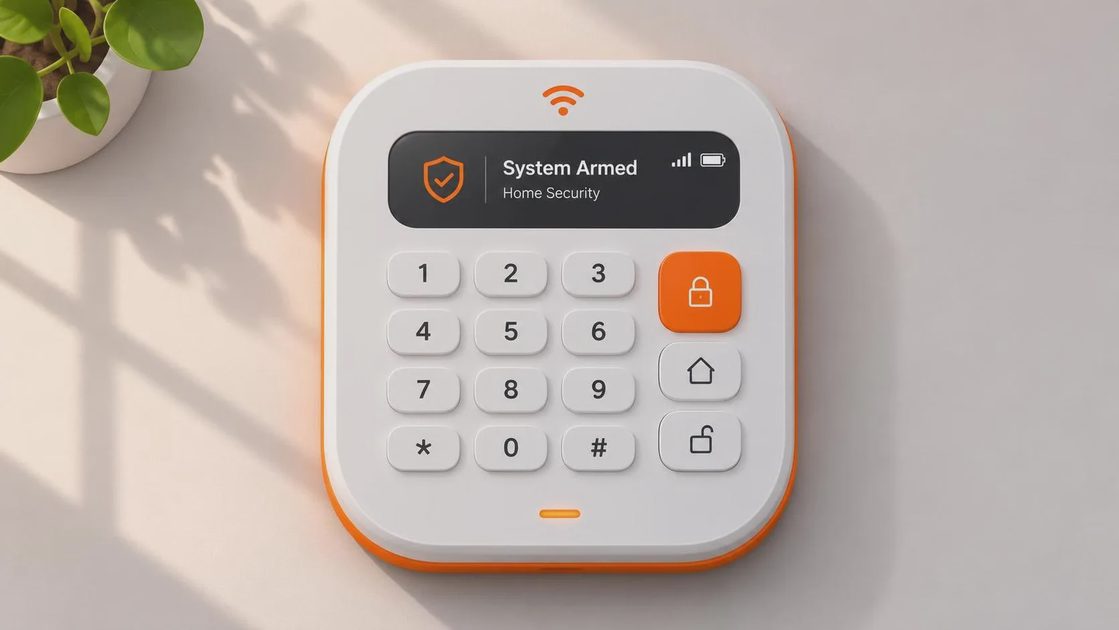
For a typical three-bedroom older home, I would start with a base station, keypad, three entry sensors, one motion sensor, and an indoor camera. That usually covers the front door, back door, a frequently used first-floor window, the main hallway, and the room where the dog spends most of the day. Add a water sensor near the basement sump pump if your house has the same damp-house personality as mine.
SimpliSafe monitoring plans are separate from the equipment. Depending on the plan and current pricing, expect a monthly charge that can range from self-monitoring options to roughly $30 or more for professional monitoring and added features. The useful comparison is annual cost: $30 per month is $360 per year, before equipment. Put that beside a traditional installed system's activation fees, service agreement, and technician visit charges.
I also price replacement batteries and extra sensors before ordering. A single entry sensor is not a budget disaster, but six “small additions” can quietly become $150. This is where my spreadsheet earns its keep — not because the math is difficult, but because impulse purchases are.
Installation in an old house
SimpliSafe is designed for do-it-yourself installation, which is a strong fit for renters and owners who do not want holes drilled through plaster. Sensors generally attach with adhesive strips, and the keypad and base station can be positioned without running low-voltage wire through a century-old wall.
That convenience has limits. Adhesive works best on clean, reasonably smooth surfaces. My old house has painted trim, textured plaster, and one doorframe that appears to have been repaired with whatever material was nearest in 1957. I would clean each mounting area, let it dry, and press the sensor in place for the time recommended by the manufacturer. Do not stick a sensor onto loose paint and blame the alarm when it falls at 2 a.m.
The system's wireless design also means placement matters. Keep the base station in a central location with reliable power, not hidden inside a metal cabinet. Walk the house after setup and test every door and window. Tim said this was obvious. Tim is the person who reads installation manuals before opening the box, so I ignored him for six minutes and then followed the manual.
For a dog, motion-sensor placement deserves extra attention. Pet-friendly settings can reduce false alarms, but they are not a force field around every Labrador-shaped object. Aim sensors across a room rather than directly at a dog bed, and test the system while your pet moves normally. A camera pointed at a crate is not a security plan; it is surveillance of a nap schedule.
SimpliSafe features worth paying for
The strongest reason to choose SimpliSafe is its modular approach. You can begin with door protection and add a glassbreak sensor, smoke detector, freeze sensor, water sensor, outdoor camera, or smart lock later. That is more logical than buying a 14-piece package because the product page made a large bundle look like a bargain.
Professional monitoring is the feature that changes the system from a collection of alerts into a response service. If an alarm triggers, a monitoring center can contact you and follow the response procedure associated with your account. That matters when you are at work, driving, or asleep with the phone in another room. Read the current plan details carefully, especially whether video verification, cellular backup, and camera features are included.
SimpliSafe cameras can be useful for checking whether a delivery arrived or whether the “intruder” was actually the dog investigating a paper bag. Still, I would not buy cameras first. Door and window sensors provide more basic coverage for less money, and a camera cannot stop someone from opening an unprotected back door.
Smart-home integrations can also be convenient, but compatibility changes over time. Treat them as an extra layer, not the foundation. The alarm should still work if the smart speaker is unplugged or the home internet goes down.
Where SimpliSafe falls short
No wireless system removes the need for physical security. A door with a weak strike plate, a window that does not latch, or a basement door hidden behind overgrown shrubs is still a problem. Spend $20 to $60 on longer screws and a stronger strike plate before spending $200 on another gadget. Security is a chain; the cheapest weak link gets the vote.
Old houses create additional complications. Thick masonry, metal ductwork, detached garages, and distant outbuildings can affect wireless coverage. Test the system from the exact locations where sensors will live. If the garage is 40 feet away through brick and two interior walls, do not assume the signal behaves like it does in a showroom.
Adhesive mounting is reversible, but it is not always permanent. Heat, humidity, dust, and repeated door vibration can reduce its grip. Keep spare adhesive strips available, and inspect sensors whenever you change batteries. This takes five minutes — less time than explaining to a monitoring agent that the alarm fell off the kitchen window.
You should also understand privacy settings before installing cameras. Review account security, use a unique password, enable available two-factor authentication, and decide which rooms should never have cameras. My rule is simple: if I would not want a repair technician to see the room, I do not place a camera there.
Could an alarm lower insurance costs?
SimpliSafe can sometimes support a homeowners insurance discount when professional monitoring is active, but discounts depend on the insurer, policy, state, and required documentation. A self-monitored alarm may not qualify for the same treatment as a professionally monitored system. Call your insurer before buying if the discount is part of your calculation.
Ask three specific questions: Does the carrier offer a monitored alarm discount? What monitoring level qualifies? Is a certificate required after installation? A discount of 5% on a $1,500 annual homeowners premium would equal $75 per year. That helps, but it does not justify a $360 monitoring plan by itself. The security benefit has to make sense even when the discount is zero.
An alarm also does not replace liability coverage, dwelling coverage, or personal property coverage. It may reduce the chance of a loss, but it does not rewrite the policy. Keep photos, receipts, and a basic home inventory separately — especially for tools, vintage furniture, and the ceramic vase collection I insist is “an asset class.”
My measured buying formula
Start with the doors and windows a person could actually reach. Add motion detection only after accounting for pets and room layout. Choose professional monitoring if you want a response when you cannot answer your phone. Add water and smoke sensors where the house has measurable risks, not where the bundle has empty slots.
Then calculate the first-year total: equipment, monitoring, extra sensors, batteries, and any mounting supplies. Compare that number with the cost of reinforcing doors and fixing broken latches. If the system fits the budget and the coverage map makes sense, SimpliSafe is a reasonable old-house security tool — not a decorative appliance with an app.
My final test is the five-minute rule. If I cannot explain what each sensor protects, who receives an alert, and what happens during a power or internet interruption, I am not ready to buy. Trust the tape, not your eye.