I spent 45 minutes choosing a trash can color, then bought nothing. That was before I started using a spreadsheet for household decisions. Led ceiling lights deserved the same treatment because the wrong fixture is not a small mistake: it can create glare, leave corners dim, or force you to redo wiring in a 1920s ceiling. Here is the system I use now — measure first, buy second, admire the fixture only after the numbers behave.
Start with lumens, not appearance
The useful number on a light box is lumens, not watts. Watts describe electricity use; lumens describe visible light. As a practical starting point, plan around 10 to 20 lumens per square foot for general living areas, with more light for kitchens, workrooms, and rooms with dark walls. A 12-by-14-foot living room is 168 square feet. At 15 lumens per square foot, that is roughly 2,520 lumens from all fixtures combined.
That total does not mean one giant glowing saucer in the middle of the ceiling. A flush mount with 1,500 lumens can handle part of the job while a floor lamp, table lamp, or reading light supplies the rest. In my living room, two led ceiling lights distribute light better than one central fixture because the room is long and the original plaster ceiling is uneven. Tim initially called this overthinking. Then he stopped losing the television remote under the sofa.
For a bedroom, 1,500 to 2,500 total lumens is usually comfortable. A kitchen often needs 3,000 to 6,000 lumens, depending on size, cabinet color, and whether under-cabinet lighting helps. A hallway needs less, but spacing matters more. Brightness without distribution is just a well-lit disappointment.
Pick the color temperature before the finish
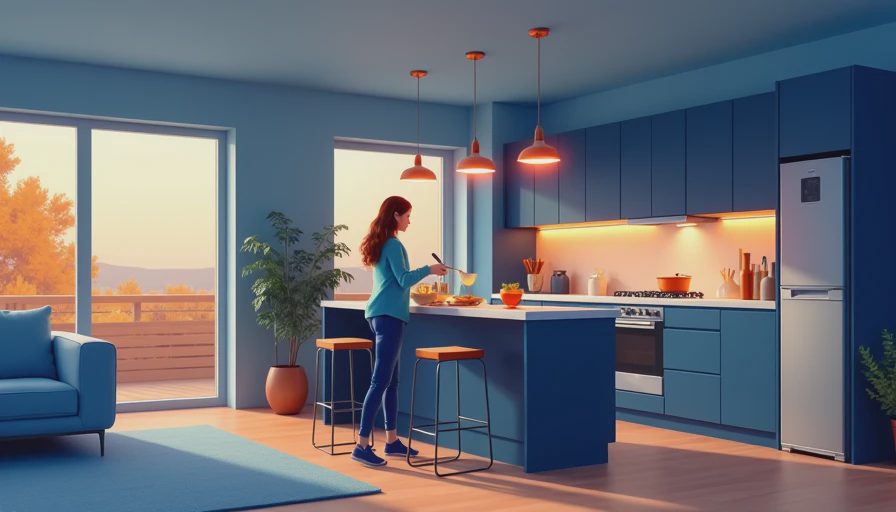
Color temperature is measured in Kelvin. Lower numbers look warmer and higher numbers look cooler. Around 2700K gives a soft, incandescent-like glow that suits bedrooms, dining rooms, and older living spaces. Around 3000K is a useful middle ground for living rooms, bathrooms, and kitchens. Daylight settings around 4000K or above can be useful in a laundry room or workshop, but they can make a warm 1920s interior look like a dentist's office.
This is where many led ceiling lights fail aesthetically. The fixture itself may be attractive, but a 5000K bulb against creamy paint and oak trim creates a blue contrast that makes everything else look tired. I use 3000K throughout most of my house and reserve cooler light for the basement workbench. Keep the color temperature consistent within a sightline — three different whites in one open floor plan will make the ceiling look like it is arguing with itself.
Also check color rendering. A higher CRI, ideally 90 or more when available, generally shows paint, wood, and fabric more accurately than a basic low-CRI product. You do not need the most expensive specification for every closet, but it matters in kitchens and rooms where you judge color.
Measure the ceiling and the junction box
Before shopping for led ceiling lights, measure the room, ceiling height, existing fixture, and junction box location. Flush mounts are forgiving when a ceiling is low, while semi-flush fixtures need extra vertical clearance. In a room with an eight-foot ceiling, I prefer a fixture that projects no more than 6 to 10 inches unless it sits over a table where head clearance is irrelevant.
The ceiling box must support the fixture, and the mounting bracket must align with it. Old houses often contain shallow boxes, loose screws, cloth-covered wiring, or a box installed slightly off-center. None of those problems improves because the new light has a beautiful brass rim. Turn off power at the breaker, verify that the circuit is dead, and hire a licensed electrician when wiring is damaged, confusing, or not securely grounded. A $150 to $350 service call is cheaper than repairing a ceiling and your confidence at the same time.
For a large room, diameter matters. A common sizing shortcut is to add the room's length and width in feet and use that number in inches. A 12-by-14-foot room points toward a fixture around 26 inches wide, although two smaller fixtures may distribute light better. Trust the tape, not your eye.
Compare fixture types by the job
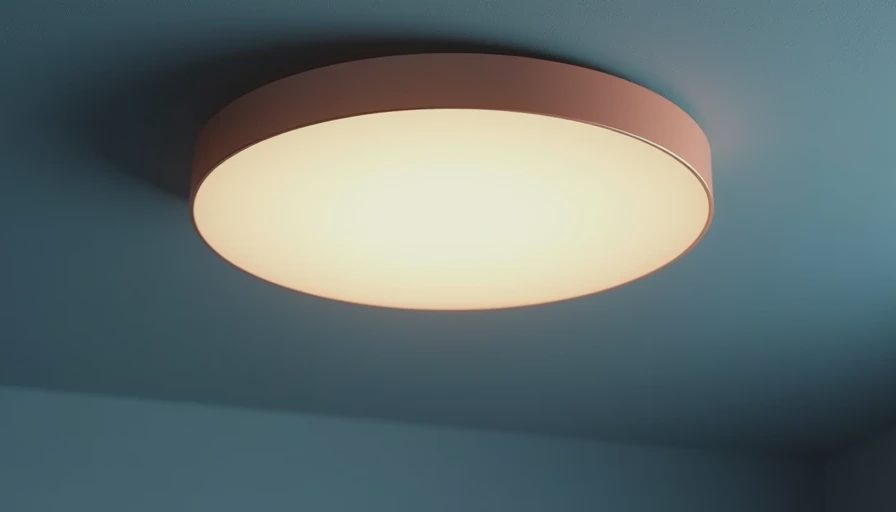
Flat integrated led ceiling lights are useful in low-ceiling rooms because they sit close to the drywall and often cost about $25 to $90. Their weak point is replaceability: when the integrated LED module fails, you may replace the entire fixture rather than a $3 bulb. That is acceptable in a closet or hallway, less appealing above a dining table where access requires a ladder and a chair negotiation.
Bulb-based fixtures cost roughly $30 to $150 and let you replace bulbs, change brightness, or alter color temperature later. I favor them in older houses because the fixture can remain while the technology changes. Look for standard E26 sockets, a removable diffuser, and enough ventilation around the bulbs.
Dimmable led ceiling lights are worthwhile in living rooms, bedrooms, and dining areas. Confirm that the fixture is dimmable and that the wall dimmer is compatible with LED loads. A mismatch can cause flickering, buzzing, or a narrow dimming range. If the room has one switch controlling everything, smart bulbs are not a cure for bad wiring; they are simply another layer of equipment.
Build the budget around installation, not the product page
A basic fixture may cost $30, while a better-finished model from brands such as Lithonia Lighting, Commercial Electric, or Kichler can run from $60 to $250 or more. Decorative designer options can exceed $400 without producing more useful light. That premium often buys materials, finish quality, better diffusion, or a recognizable design — not automatically better illumination.
For a straightforward replacement, installation might be modest if an electrician is already working nearby. A new location, ceiling repair, switch relocation, or attic access can change the budget quickly. I use three lines in my project sheet: fixture price, electrical work, and patching or paint. A $90 fixture that requires $250 of electrical work is a $340 purchase, not a $90 purchase.
Buy two matching fixtures when possible, even if you install only one initially. Manufacturers discontinue finishes and revise product lines. I once waited six months to buy a second light, then discovered the original had been replaced by a version with a visibly different diffuser. The ceiling remembered. My budget did not appreciate the lesson.
A five-minute buying formula
Measure the room and calculate its square footage. Choose a target lumen total, then divide it among fixtures and lamps. Select 2700K for cozy rooms, 3000K for most mixed-use spaces, and cooler light only where task visibility justifies it. Check diameter, projection, box compatibility, dimming, CRI, and return policy before comparing finishes.
For a 168-square-foot living room, I might choose two led ceiling lights at 1,200 to 1,500 lumens each, set near 3000K, plus one floor lamp for reading. For a 50-square-foot hallway, one fixture around 800 to 1,000 lumens may be enough, provided it is centered and the diffuser spreads light rather than creating a bright circle directly beneath it.
The finish comes last because it is the least expensive variable to change mentally and the least useful variable for calculating performance. Black, brass, white, and bronze can all work when the scale and light quality are right. Start with the wiring and the room math, not the staged photograph.
That is the whole method: lumens for quantity, Kelvin for mood, measurements for scale, and a realistic electrical allowance for the old-house surprises. Led ceiling lights are not automatically the right answer, but they become a sensible purchase when the numbers fit the room. Trust the tape, not your eye.