I've pulled up more subfloors than I care to count. The cost to install plywood subfloor isn't one number — it's a stack of smaller numbers: plywood grade, fastener type, labor rate, and whether your old floor is hiding rot. After renovating three old houses in Ohio, I've paid this bill three different ways. Here's what I learned so you don't have to learn it with your checkbook.
What Actually Drives the Price
Let's start with the raw material. A standard 4x8 sheet of CDX plywood — that's the construction-grade stuff — runs $35 to $65 per sheet in most of the US. That's $1.10 to $2.00 per square foot just for the board. If you step up to tongue-and-groove plywood with an exposure rating, you're closer to $50 to $75 a sheet. Then add screws, construction adhesive, and a circular saw blade that's sharp enough to make clean cuts — call it $0.15 to $0.30 per square foot for consumables.
Labor is the bigger variable. A local flooring contractor usually charges $1.50 to $3.50 per square foot to install a plywood subfloor, assuming easy access and no surprises. In Columbus, where I live, I've been quoted $2.25 per square foot for a straightforward 500-square-foot room. In coastal cities, that same job can push $4.
Plywood vs. OSB: The Material Price Divide
I'll save you the debate: oriented strand board, or OSB, is cheaper but not better for this application. A sheet of OSB runs $20 to $40, which shaves $0.40 to $0.80 per square foot off the material bill. But OSB swells when it gets wet, and the edges can buckle in old houses with crawl-space humidity. I used OSB in one rental reno and regretted it after the first winter. The cost to install plywood subfloor over the same area was $150 more in materials — and zero callbacks. Plywood also holds screws better, which matters if you're planning hardwood or tile on top.
Labor Costs: What a Pro Will Charge
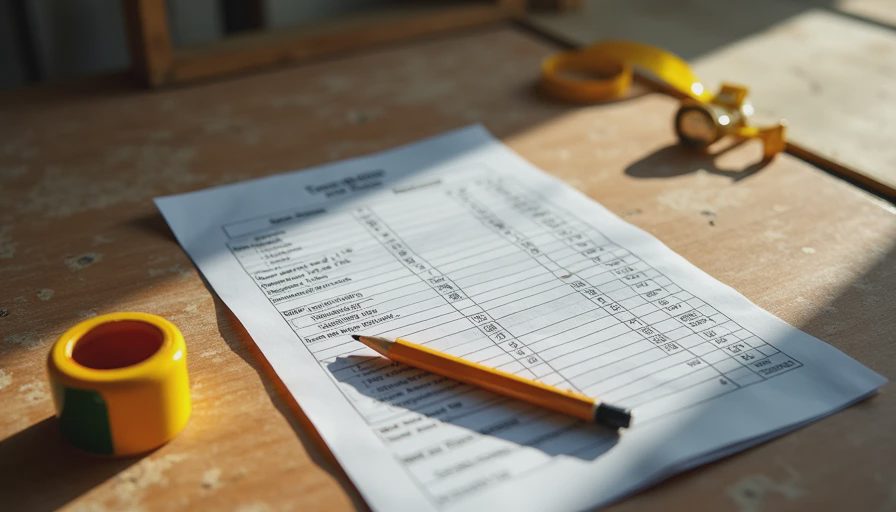
If you hire it out, labor is where the real money goes. Most pro estimates I've seen break down like this:
- Remove old subfloor and haul debris: $1.00 to $2.00 per square foot.
- Install new plywood subfloor: $1.50 to $3.50 per square foot.
- Flatten and clean the joists: $0.50 to $1.25 per square foot, if required.
Add those together and you're often at $3 to $6 per square foot before materials. On a 400-square-foot room, that's $1,200 to $2,400. A licensed contractor also needs permits in some municipalities, which adds $50 to $250 depending on your ZIP code.
DIY vs. Hiring Out: Where the Money Really Goes
Now the part that gets DIYers in trouble. I'm not here to tell you that you can't do it — I've done it three times. But you need to count your hours like you count your dollars. A 400-square-foot subfloor install takes two moderately skilled people about two full days, including prep and cleanup. At $30 an hour (your time, your spouse's time, or your friend's pizza debt), that's roughly $960 in sweat equity. The cost to install plywood subfloor with a contractor at $4.50 per square foot all-in lands around $1,800. So you can save maybe $600 to $800 by going DIY — if you have the right tools.
Here's the trap: buying a nail gun, compressor, circular saw, and safety gear adds up fast. I hit $400 at the rental counter before I bought my own. If you don't own a compressor, add $300 to $500 to the DIY total. That's why the gap between DIY and pro is thinner than most clickbait suggests.
How to Save Without Cutting Corners
The cheapest plywood subfloor is the one that doesn't fail in five years. Here's my actual strategy:
- Buy CDX or tongue-and-groove plywood in bulk. Lumber yards give 10% to 15% discounts on full units, usually 40 to 50 sheets.
- Use 1-5/8-inch coated deck screws instead of ring shank nails. Screws cost more per pound but save you a call-back if a floor squeaks later.
- Check for damaged panels at the store. A warped sheet that you have to cut around wastes $50 and an hour.
- If you're doing this above an unheated crawl space, add a vapor barrier. That's $0.10 per square foot and the best insurance premium you'll ever pay.
Real-World Numbers: Three Scenarios
Let me give you actual totals from jobs I've watched or run. A 300-square-foot laundry room with old particle board removal: $1,450 through a handyman in 2023. A 600-square-foot living room with good joists and CDX plywood: $2,800 with a flooring contractor. A full 1,200-square-foot first floor in a 1940s house, including underlayment and debris disposal: $5,500. The biggest surprise was disposal — hauling away old subfloor runs $50 to $150 per ton in my city.
If you're budgeting, take the square footage of your room and multiply by $4. For materials and labor, that lands mid-range. Then add 15% for overage and surprises — there's always at least one odd corner or a joist that needs sistering.
The Bottom Line: Budget Like an Engineer
So what's the honest range for the cost to install plywood subfloor in 2025? Expect $2.50 to $4.50 per square foot for DIY with basic tools, and $4 to $8 per square foot through a contractor, all-in. For most rooms, that's $1,000 to $3,000. The plywood itself is the cheap part; your time and labor are the real line items.
Here's the formula I use for every reno decision: total expected cost divided by years you plan to live in the house. If that number is less than a takeout pizza per week, just do it. And trust the tape, not your eye.