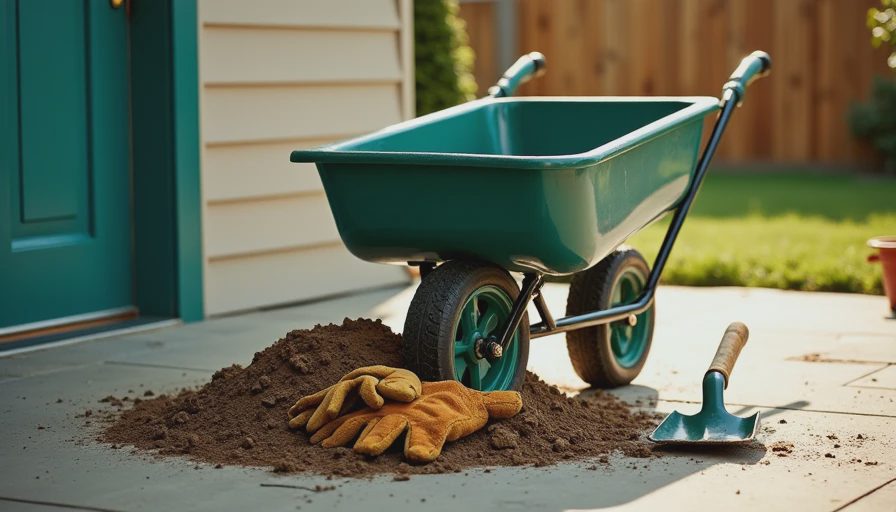
A wheelbarrow is a simple tool with an irritating number of ways to buy the wrong one. I learned this after hauling six bags of compost across a sloped backyard with a narrow steel model that tipped whenever the golden retriever expressed an opinion. The dog was fine. My lumbar spine filed a formal complaint. Here is the system I use now: measure the path, estimate the load, then choose the wheelbarrow around those facts—not the paint color.
Start with the load, not the label
Most residential yard work falls into three categories: light planting materials, bulky cleanup, and heavy construction debris. A 4-to-6-cubic-foot wheelbarrow handles mulch, leaves, soil, and perennial divisions without becoming an awkward bathtub on a tire. A larger 7-cubic-foot model carries more, but a full load of wet soil can exceed 250 pounds. That is not a productivity upgrade if you cannot move it safely.
For my 1920s house, the useful target is a 6-cubic-foot wheelbarrow with a steel frame and a tray that does not flex under weight. Compost and bark mulch are forgiving. Broken brick, stones, and demolition scraps are not. If your project involves rubble, look for a deeper tray, reinforced nose, and a listed capacity rather than relying on the phrase contractor grade. Marketing copy does not lift the load; wheel placement does.
A plastic tray usually costs less—roughly $60 to $120 for common homeowner models—and resists rust. Steel models often land around $90 to $220 and tolerate sharper debris better. I prefer steel for renovation cleanup and thick plastic for compost. Tim prefers whichever one has the least chance of becoming a future repair project. We are both correct, annoyingly.
One wheel, two wheels, or a flat-free tire?
The traditional single-wheel wheelbarrow turns tightly and works well between raised beds, shrubs, and old foundation plantings. It also demands more balance. If the path slopes sideways or the load is uneven, the wheelbarrow wants to list like a tiny cargo ship. That is manageable with dry leaves; it is less charming with wet clay.
A two-wheel wheelbarrow is steadier and generally easier for a new gardener, a driver with limited lifting strength, or anyone moving dense loads. The tradeoff is turning radius. Measure the narrowest gate and bed gap before ordering. My side gate is 34 inches wide, but the usable opening is closer to 31 inches once the latch and hinge hardware are counted. A wide two-wheel model would fit on paper and fail in reality—the classic old-house measurement trap.
Pneumatic tires absorb bumps, but they require air and can puncture. Flat-free tires cost a little more and feel firmer over roots, although they can transmit more vibration through the handles. For a short garden path, flat-free is my spreadsheet choice: one replacement tube avoided is worth the modest premium. If you regularly cross gravel or construction waste, check the tire diameter too. A larger wheel rolls over obstacles more easily than a small wheel, regardless of the tray.
Handles, height, and control
The handles should let you stand upright enough that your knuckles are not scraping your knees. I am 5 feet 6 inches, and models with low handles force me to bend before the load even starts moving. Tim is taller, so our shared wheelbarrow needs a neutral middle position rather than a perfect fit for one person. Place both hands on the grips in the store—or measure from the ground to your relaxed hands at your side—and compare that distance with the handle height.
Look for handles with rounded ends, enough separation for your shoulders, and no sharp welds. Hardwood handles feel warm and can be replaced, but they need occasional sealing if stored outdoors. Powder-coated steel handles clean easily and usually match a steel frame. Neither option compensates for a poorly balanced tray. When empty, lift the handles and check how much weight sits over your arms. When loaded, the wheel should carry most of the mass while you steer and stabilize.
This is where a cheap wheelbarrow can become expensive. Saving $30 on purchase price is not a savings if every load requires two trips or one emergency pause halfway to the compost pile.

The storage calculation people skip
Before buying, measure the storage location in three directions: height, width, and depth. A traditional wheelbarrow often stores vertically against a garage wall, but the handles may extend 60 inches or more. Two-wheel designs can be wider and harder to hang. If your garage already contains a mower, folding ladder, recycling bins, and one mysterious box labeled “electrical,” floor space is the real constraint.
I keep mine nose-down beside the shed, with the handles lifted onto a simple wall hook. The hook cost about $15, while a purpose-built rack can cost $40 to $90. The important measurement is clearance below the lowest shelf. Allow enough room to remove the wheelbarrow without dragging the tray across the floor. Wet steel left against concrete is also an excellent recipe for rust, so I keep a small gap under the frame and empty rainwater after every storm.
For renters or gardeners without a shed, a compact garden cart may be easier to store. That is not a failure of commitment; it is a space calculation. A wheelbarrow that blocks the only path to your water shutoff is badly placed equipment, no matter how impressive the tray looks online.
A five-minute buying test
At the store, inspect the wheel, axle, tray, and frame before touching the accessories. The wheel should spin without scraping, and the axle should feel secure rather than loose. Press gently on the tray sides. Some flex is normal for plastic, but a tray that folds under hand pressure will not improve with a load of gravel.
Lift the empty wheelbarrow, walk several steps, and make a tight turn. Then imagine the load: where will the center of gravity sit, and can you still see your feet? Check whether the support legs remain stable on uneven ground. Short legs can make unloading easier but may feel tippy. Long legs improve stability while taking more storage space.
If buying online, prioritize measurements, materials, wheel type, and replacement-part availability. Product reviews are useful for discovering recurring failures—bent axles, cracked trays, loose handles—but they are not a substitute for capacity data. Brands such as True Temper, Jackson, Gorilla Carts, and WORX cover different designs and price points; compare construction rather than assuming the highest price wins.
My practical formula for the purchase
Use this sequence: path width minus two inches equals your maximum cart width; typical load volume plus 20 percent equals your target tray size; heavy debris points toward steel; uneven ground favors a larger pneumatic or flat-free wheel; limited strength favors two wheels; outdoor storage requires rust resistance and a cover.
For most old-house yards, I would spend $100 to $180 on a wheelbarrow with a 5-to-6-cubic-foot tray, a durable wheel, replaceable handles or axle parts, and enough balance that the operator is not carrying the load. Spend more only when the use case proves it: frequent masonry work, professional landscaping, or steep terrain. Spend less for occasional leaves and light planting.
I still measure the gate before shopping. I still stand in the aisle holding handles like a person who has misplaced her dignity. The difference is that I now trust the tape, not my eye—and the dog gets no vote.