A laser measure can save an old-house project from expensive guesswork. I learned that after ordering a shelving unit that was 2 inches too deep for the hallway — a small measurement error with a very large return box. Tim, my civil engineer husband, asked why I had not measured the wall twice. I had. I had simply measured the wrong wall.
That failure changed my process. Now I use a laser measure for long walls, ceiling heights, awkward corners, and furniture layouts, then confirm anything critical with a metal tape measure. Trust the tape, not your eye — and trust the laser when the tape starts behaving like a piece of cooked spaghetti.
What a laser measure actually does
A laser measure sends a light beam to a surface and calculates the distance between the device and that surface. Most consumer models display measurements in feet, inches, or both. Entry-level tools commonly measure around 40 to 65 feet, while higher-end units can reach 100 feet or more indoors.
For a typical living room, you do not need surveying equipment. You need a tool that gives repeatable readings, has a clear display, and does not turn a simple wall measurement into a software tutorial. Accuracy within about 1/16 inch is common on better household models, but the result depends on how steadily you hold the device and whether the laser lands on a suitable surface.
Dark, glossy, transparent, or highly textured surfaces can confuse the sensor. A mirror, window, black tile, or shiny refrigerator door is not a fair test. Aim at a matte wall, place a piece of painter's tape on the target, or use the tool's compatible target card if one is included.
A laser measure is especially useful in an old house because walls are rarely perfect. I can check the distance from a radiator to a sofa, measure a sloped attic ceiling, or calculate whether a 36-inch cabinet will clear a crooked doorway without stretching across the room with a tape measure.
The features worth paying for
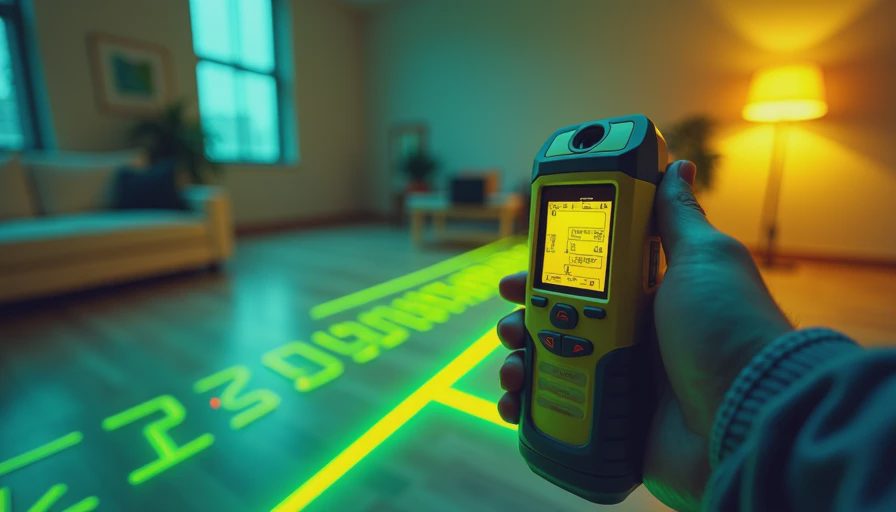
The most useful feature is not Bluetooth. It is a readable backlit screen. If you are measuring a dim basement, a hallway under construction, or a closet with one weak bulb, a bright display prevents transcription mistakes. I have written 84 inches as 48 inches before. The resulting curtain rod was technically beautiful and practically useless.
Look for a minimum, maximum, and continuous measurement mode. The minimum setting helps find the shortest distance between two points — useful for checking a narrow passage. Continuous mode lets you walk toward a wall while watching the distance change, which is helpful when positioning a rug or planning a furniture footprint.
Area and volume calculations are convenient for quick estimates. If a room measures 12 feet by 15 feet, the tool can calculate 180 square feet for flooring or an area rug plan. Do not treat that number as a final material order. Old houses have alcoves, closets, angled walls, and waste factors. Add your purchasing allowance separately.
Memory storage is worthwhile if you are measuring several rooms. A tool that saves the last 10 readings reduces the frantic notebook shuffle that happens when the dog decides your pencil is a chew toy. Bluetooth is useful when you regularly transfer measurements into a phone app, but it is not essential for hanging shelves or buying a sofa.
My practical short list by budget
Under $30, basic models can handle short indoor distances, but expect fewer calculations, a less refined display, and more sensitivity to hand movement. This category works for occasional picture hanging or checking a furniture gap. I would not use the cheapest model for a full kitchen order.
Around $40 to $80 is the useful middle. Brands such as Bosch, DEWALT, and Leica DISTO offer household and light-duty options in this general territory, depending on model and retailer. You can usually find better displays, area calculations, improved range, and more consistent construction. This is where I would spend my money for a homeowner who measures twice a month.
At $100 and above, the laser measure becomes more specialized. Longer range, stronger housings, advanced Bluetooth features, and improved target handling can matter to contractors or people managing repeated renovation work. For my own house, the extra features only earn their keep if I am measuring every week.
Price is not a proxy for wisdom. I once spent 45 minutes choosing between two trash cans and then bought neither. The same decision rule applies here: list the three tasks you will actually perform, then buy the least expensive model that handles all three.
How I use one for furniture and soft furnishings
Start by measuring the room perimeter, then record doors, windows, radiators, outlets, and permanent trim. Measure each wall from corner to corner rather than assuming opposite walls match. In my 1920s house, one living-room wall is nearly an inch longer than the other. That difference matters when a rug, bookcase, or sectional has a rigid footprint.
For a sofa, measure both the wall space and the delivery path. Check the front door, porch steps, hallway turns, stair landing, and the narrowest opening. A sofa listed as 84 inches wide may still fail at a 31-inch doorway if the frame cannot rotate. Use the laser measure for distances, but use a cardboard template or painter's tape on the floor to visualize the actual footprint.
For rugs, measure the seating zone rather than the empty room. A common living-room arrangement needs at least the front legs of the sofa and chairs on the rug. If the rug must stop before a radiator or fireplace, mark those boundaries first. The laser measure gives you the numbers; the tape on the floor tells you whether the arrangement feels physically crowded.
Pet owners should measure clearances with the dog included — not because the dog understands geometry, but because a golden retriever can occupy 12 square feet while apparently occupying the entire house. Leave a sensible walking route between furniture, water bowls, and exterior doors.
A five-minute measuring system
Before measuring, write the project name and units at the top of a note. I use inches for furniture and feet for room planning, but I do not mix them within one calculation. Choose a fixed reference point, such as the finished wall surface or the edge of the baseboard, and use it consistently.
Take each important measurement three times. If the readings differ, stop and find out why. The device may be tilted, the target may be reflective, or the wall may not be straight. Record the smallest clearance when ordering anything that must fit. Record the largest usable dimension when estimating a rug or flooring area.
Then photograph the space with the notes visible. This sounds excessive until you are standing in a showroom six weeks later trying to remember whether the outlet was 18 inches or 28 inches from the corner. A laser measure gives precision, but documentation keeps that precision attached to the right room.
When a laser measure is not enough
Do not use one as a substitute for a stud finder, level, or professional site measurement. It cannot tell you whether a wall is load-bearing, whether a floor is level, or whether a hidden pipe occupies the spot where you want to drill. Tim has said this at least 14 times. He has been right 14 times.
For built-in cabinets, countertops, stair parts, or glass, verify dimensions with a second method and follow the installer’s requirements. Temperature, angle, surface condition, and user technique can affect readings. A few minutes of confirmation is cheaper than a custom replacement.
My formula is simple: use the laser measure for speed, the metal tape measure for confirmation, painter's tape for scale, and a written record for memory. Spend $40 to $80 if you want a dependable household tool, buy more only when the work justifies it, and measure the path before buying the object. Trust the tape, not your eye.