An expandable garden hose looks like a small fabric-covered coil until water pressure turns it into a surprisingly long watering tool. I bought my first expandable garden hose after dragging a stiff 50-foot rubber hose around my 1920s house for three summers. The hose weighed enough to qualify as a minor landscaping project. Then the fabric split near the connector in August, exactly when the garden needed daily watering. Tim said the failure point was obvious. He was right, which was irritating.
The useful question is not whether this style expands. It does. The useful question is whether the hose has the length, fittings, storage method, and water pressure performance your property requires. Trust the tape, not your eye.
Measure the route before choosing a length
Manufacturers usually list an expandable garden hose by its expanded length — 25, 50, 75, or 100 feet. That number describes the hose under water pressure, not the compact length in the package. A 50-foot model may shrink to roughly 15 to 20 feet for storage, but your usable reach depends on the faucet location, bends, and the distance you need to walk around beds.
I measured from the outdoor faucet to the far corner of the foundation planting: 38 feet in a mostly straight route. A 50-foot hose gave me enough working slack without creating a loop pile beside the porch. A 25-foot version would have reached the shrubs but not the raised vegetable bed. A 100-foot hose would have added weight, drag, and more fabric to trip over without solving a real problem.
Use this formula: measure the longest route, add 10 to 15 percent for movement, then choose the next practical size. For a 42-foot route, a 50-foot expandable garden hose is the sensible starting point. Do not buy 100 feet because the larger number feels safer. Extra hose is not free reach; it is extra storage and another section that can catch on a rose thorn.
Check the construction, not just the color
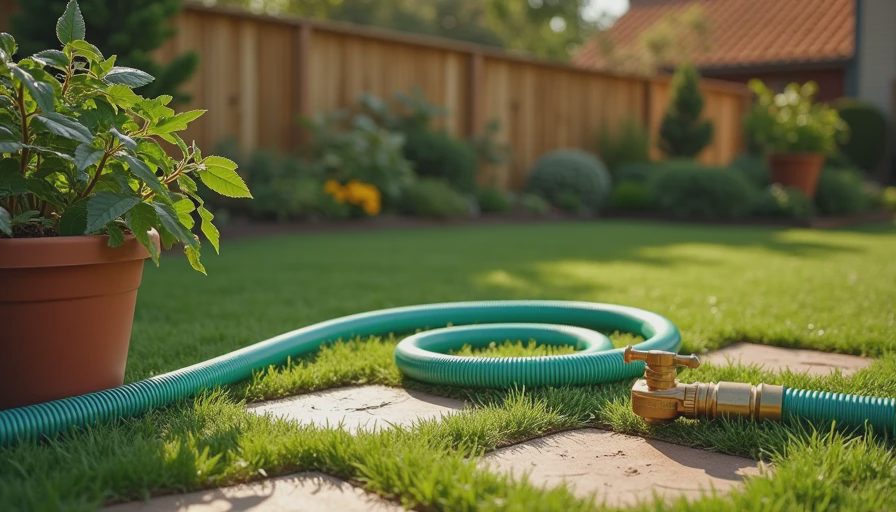
Most expandable garden hose designs combine an inner latex or rubber tube with a fabric outer layer. The inner tube creates the expansion, while the outer sleeve limits stretching and protects the tube from some abrasion. That sleeve is not armor. A sharp corner, dog claw, hot pavement, or dragged metal nozzle can still damage it.
Look for a multi-layer latex core rather than an extremely thin single layer. Brass or heavy-duty polymer connectors are preferable to flimsy plastic threads, especially if the hose stays attached to a metal faucet. The connector should seat squarely, and the washer should fit tightly without requiring heroic force from your pliers.
A good expandable garden hose should include a shutoff valve or offer a compatible one at the faucet end. The valve lets you reduce pressure before disconnecting and prevents a fully contracted hose from snapping around when the spray nozzle is removed. I also prefer a nozzle with a comfortable grip rather than a decorative eight-pattern model with a trigger that requires constant hand pressure. My hands are busy enough holding the dog leash.
Price usually reflects these details. Basic models often cost about $20 to $35, midrange versions commonly land around $35 to $60, and heavier-duty options can exceed $70. Paying more is reasonable when the connectors and replacement parts are better. Paying more for a bright turquoise sleeve with the same fragile fittings is just expensive decoration.
Use the hose in a way that prevents early failure
An expandable garden hose should be turned on gradually. Open the faucet a little, let the hose fill and lengthen, then increase the flow. When finished, shut off the water at the faucet and drain the hose completely before coiling or storing it. Leaving water inside keeps the tube under unnecessary pressure and makes the compact hose heavier than it needs to be.
Never drag a full expandable garden hose across concrete if you can avoid it. Carry the contracted hose to the watering area, connect it, and pull it gently after it has filled. Do not drive over it, hang it on a sharp nail, or leave it baking on dark pavement all afternoon. These are not delicate museum objects, but fabric-covered tubing has limits.
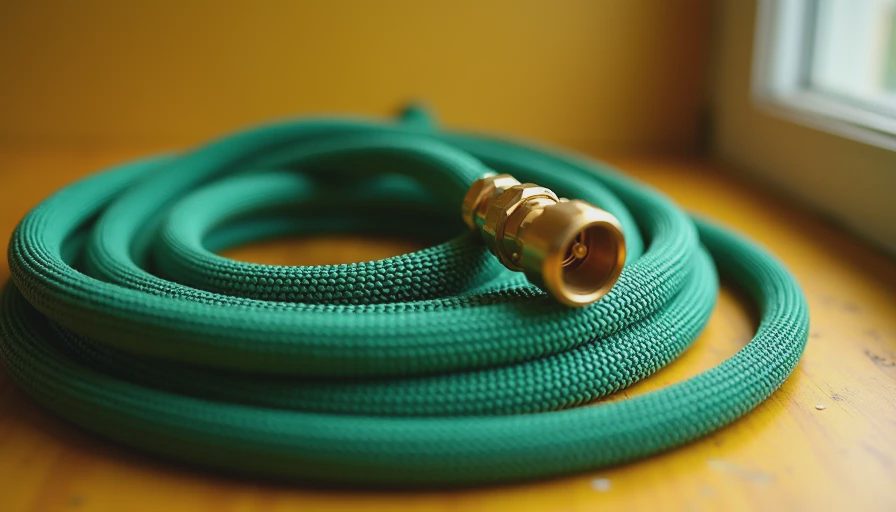
My storage system is a 12-inch plastic basket beside the back door. The hose drains on a slight slope, contracts, and drops into the basket without a tight knot. A wall-mounted hanger also works, provided its edges are rounded and the hose is protected from direct winter weather. In freezing climates, disconnect and store it indoors before the first hard freeze. Frozen water expands inside the tube and can turn a small weakness into a split.
Match the hose to each household job
For container plants on a porch, a 25-foot expandable garden hose is usually easier to manage than a long model. It has less drag and fits in a small basket. For a detached garage, front beds, and a backyard faucet served by one connection, 50 feet is often the practical middle ground. A 75- or 100-foot model makes sense only when the route is genuinely long and you cannot install another faucet.
Pressure matters too. A hose that expands fully in one home may remain partly contracted in another if the outdoor spigot has weak flow, a clogged screen, or a pressure-reducing device. Before blaming the product, remove the nozzle and test the faucet directly for a minute. If the flow is poor, inspect the washer and faucet screen. Tim tested ours with a five-gallon bucket and a stopwatch because apparently marriage includes unrequested flow-rate experiments.
For washing a car, choose a model with fittings that do not scratch painted surfaces and keep the hose away from tires. For garden beds, prioritize a gentle spray wand and a length that does not crush seedlings as you reposition it. One expandable garden hose can handle several jobs, but the right nozzle determines whether the water lands on the soil or on your shoes.
A five-minute buying checklist
Before ordering an expandable garden hose, write down five measurements and specifications. First, record the longest faucet-to-task distance. Second, note whether you need 25, 50, 75, or 100 feet after adding working slack. Third, check the faucet thread size and whether a quick-connect adapter is included. Fourth, confirm the storage plan — basket, hanger, reel, or indoor shelf. Fifth, read the warranty terms for leaks, connector failure, and replacement availability.
Then inspect customer photos rather than relying on product color images. Look for separated fabric near the faucet, cracked plastic couplings, and reports that the hose does not contract after draining. A few complaints are normal for any mass-produced item; a repeated pattern around the same connector is useful evidence.
If your old hose failed at the faucet, spend the budget on fittings. If it failed in the middle after being dragged over masonry, improve your storage and handling habits. If it was simply too short, measure again instead of guessing. The cheapest purchase is the one that solves the actual failure.
My final formula is simple: route length plus 10 percent, brass or sturdy fittings, gradual fill, full drainage, and protected storage. That calculation gives you a useful expandable garden hose without turning the purchase into another renovation spreadsheet. Trust the tape, not your eye.