I spent 45 minutes in Home Depot comparing two nearly identical hose-end sprinklers, then bought the wrong one. The spray missed the dry strip beside the driveway, soaked the porch, and made the dog a muddy science experiment. That was my introduction to choosing the best yard sprinkler by appearance instead of measurements. Trust the tape, not your eye.
The right choice depends on three numbers: lawn width, lawn depth, and available water pressure. A $20 sprinkler can outperform a $70 model in a small rectangular yard, while a premium rotating unit can waste time on a large lawn if its flow is weak. Before shopping, measure the area and sketch obstacles such as trees, fences, foundation beds, and sidewalks.
Start with the lawn, not the product aisle
The best yard sprinkler is the one that matches your lawn's shape. Oscillating sprinklers send a fan-shaped pattern across rectangular spaces and are usually the easiest fit for a typical front lawn. Rotary sprinklers throw circular or partial-circle patterns, which makes them more useful around a corner, garden bed, or oddly shaped side yard. An impact sprinkler covers larger areas and can travel farther, but its clicking mechanism is louder and its pattern is less gentle on newly seeded grass.
Measure the longest reach from the outdoor spigot to the far edge of the grass. Then measure the width at several points. My front lawn is roughly 28 feet deep and 42 feet wide, but the flower bed removes a six-foot strip from one side. That eliminated a full-circle sprinkler immediately. A rectangular spray with adjustable width gave me better coverage without watering the foundation.
Also measure the hose route. A 50-foot hose sounds generous until it must travel around a porch and avoid the dog's water bowl. Add the distance from the spigot to the lawn, then keep at least 10 feet of spare length so the connection is not pulled sideways.
Oscillating, rotary, or impact?
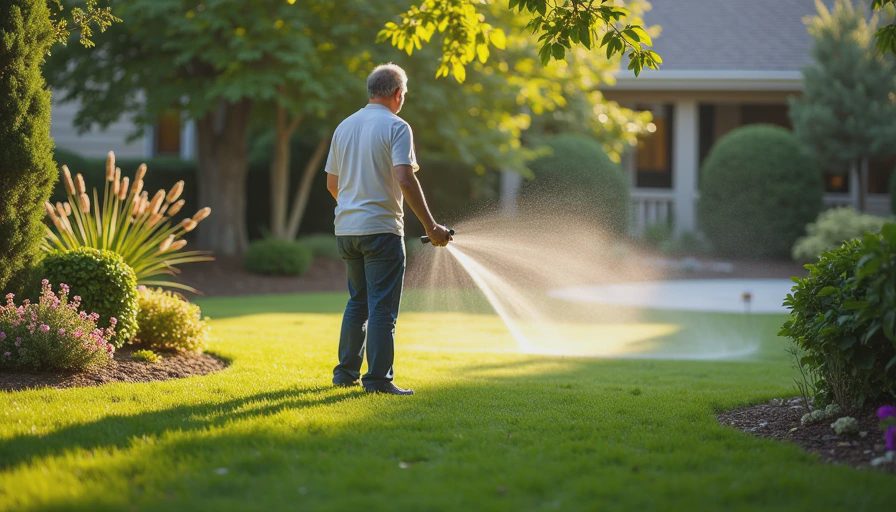
For most older-home lawns, I start with an oscillating model. Brands such as Melnor and Orbit sell adjustable versions with metal or plastic bases, sliding tabs, and flow controls. The adjustable tabs matter more than a shiny metal frame because they let you narrow the pattern near a sidewalk. Expect to pay about $15 to $45 for a capable hose-end unit.
A rotary sprinkler is better when the lawn is compact but not rectangular. The best yard sprinkler for my narrow side strip is a gear-drive rotary model set to a partial circle. It waters the grass beside the garage while leaving the wall and mulch mostly dry. Many rotary models cost $12 to $35, although coverage depends heavily on water pressure.
Impact sprinklers make sense for broad open areas, especially when you need a long throw. They typically cost $20 to $60 and can be mounted on a sled, spike, or tripod. The spike is stable in soil but inconvenient in hard-packed ground. A sled is easier to move and less likely to become a tripping hazard, but a dog can drag it several feet before you notice.
Water pressure changes the result
Product packaging often lists an impressive maximum diameter. Treat that number as a laboratory ceiling, not a promise for your backyard. Pressure drops when a long, narrow hose is connected, when another faucet is running, or when the sprinkler has a restrictive inlet. Tim tested our spigot with a pressure gauge because he enjoys making ordinary errands unnecessarily technical. The useful lesson was simple: the sprinkler pattern shrank when I used an old kinked hose.
Use a clean, 5/8-inch garden hose for most residential lawns, and remove kinks before judging the sprinkler. If water barely reaches the middle of the grass, replacing the sprinkler may not solve the problem. A shorter hose or a wider hose can improve flow. Avoid connecting several hose-end sprinklers in series unless the manufacturer specifically supports it; the final unit will usually dribble rather than spray.
The best yard sprinkler should create overlapping coverage, not one dramatic fountain. Set a straight-sided pan or empty tuna can in the spray area and run the unit for 15 minutes. If one container has twice as much water as another, adjust the pattern or move the sprinkler. This test costs nothing and reveals more than standing on the porch guessing.
Features worth paying for
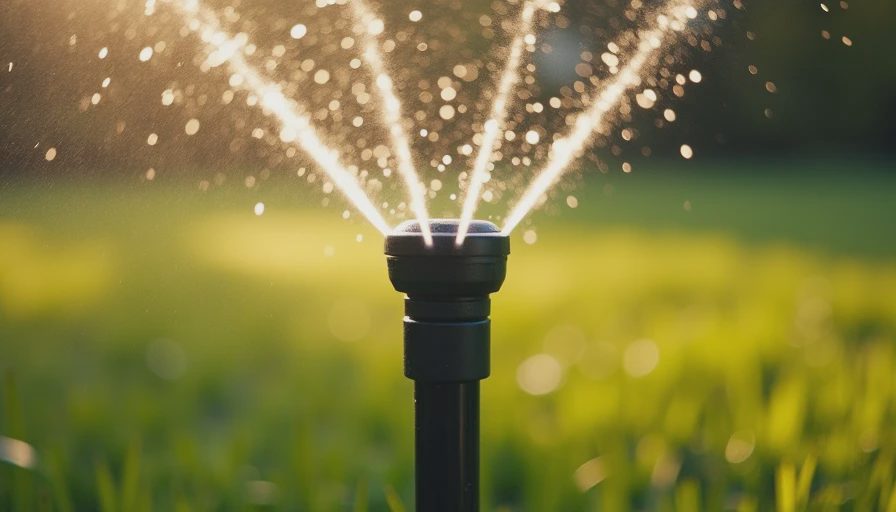
A flow-control valve is useful when the sprinkler throws beyond the property line. Pattern controls are even more valuable: look for adjustable width, distance, or rotation rather than decorative metal. A heavy sled base helps on pavement, but plastic is perfectly reasonable if the sprinkler is stored after use. Metal parts can resist cracking, yet they are not automatically better if the adjustment tabs are flimsy.
A timer is the first upgrade I would buy after choosing the best yard sprinkler. Basic hose timers often cost $25 to $50 and can prevent the classic mistake of turning on the water before coffee and remembering it at lunch. Choose a model with a manual override, clear run-time controls, and a battery compartment that does not require a screwdriver every time.
Do not confuse a timer with a soil sensor. A timer follows a schedule; it does not know whether rain has already saturated the lawn. A separate moisture sensor or rain-delay feature can reduce unnecessary watering, but the simplest savings often come from running the sprinkler before the sun is high and checking the soil first.
The setup I would repeat
I place the sprinkler on the dry edge of the lawn, connect the hose without twisting the fitting, and turn the faucet on slowly. Then I watch the spray for five minutes. I am looking for three failures: water landing on siding, dry corners, and runoff moving toward the street. Each failure has a practical fix—reduce the arc, shift the sprinkler, or shorten the run time.
For a new seed bed, I use a gentle oscillating pattern and shorter cycles so the soil stays damp without forming puddles. For established grass, I prefer deeper, less frequent watering rather than daily surface splashing. The exact schedule depends on weather, soil, grass type, and local restrictions, but the pan test helps confirm what the lawn is actually receiving.
My neighbor bought an inexpensive circular sprinkler for a rectangular lawn and moved it six times per watering session. At 12 minutes per position, that was more than an hour of supervision. A $25 oscillating model would have covered the same area in two or three placements. Purchase price was not the expensive part; labor was.
My buying formula
Choose an oscillating sprinkler for a mostly rectangular lawn, a rotary model for narrow or curved spaces, and an impact sprinkler for open ground that needs long reach. Add a timer if you are likely to forget the hose, and add a better hose before blaming low coverage on the sprinkler.
My final worksheet is deliberately boring: measure the lawn, mark the no-water zones, check the hose length, test one sprinkler with containers, and calculate how many placements the job requires. If the spray reaches the edges evenly without soaking the house, the product has passed. That is the best yard sprinkler for your property—not the one with the highest advertised square footage.
I still stand in the aisle too long. The difference is that I now bring measurements, a five-minute decision limit, and no confidence in packaging photographs. Trust the tape, not your eye.