I once tightened a set of wheel bolts by feel and called the job finished. Tim, my civil engineer husband, asked one question: “What torque did you use?” My answer was a shrug. That was the day I started researching the best torque wrench instead of trusting my arm, my confidence, or the mysterious “good and tight” setting.
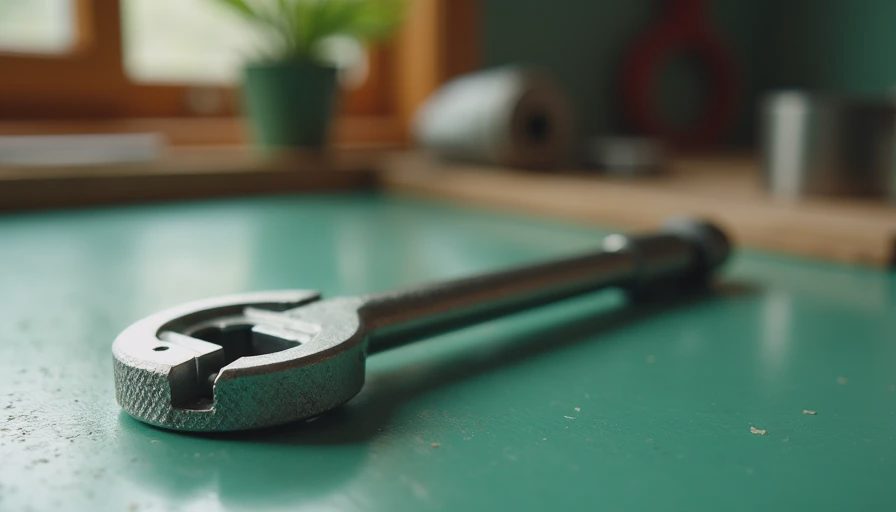
A torque wrench is not just another shiny tool for a crowded garage drawer. It applies a measured amount of twisting force to a fastener, helping prevent loose bolts, damaged threads, warped parts, and expensive repairs. Whether you work on a car, bicycle, lawn equipment, or old-house hardware, the best torque wrench is the one with a suitable range, readable markings, a useful drive size, and accuracy you can actually rely on.
What a torque wrench actually does
Torque is rotational force, usually measured in pound-feet, pound-inches, or Newton-meters. Your vehicle’s service manual might specify 80 pound-feet for a wheel lug, while a bicycle stem bolt may call for only 5 Newton-meters. Those are not interchangeable jobs. A tool designed for large automotive fasteners can be awkward and inaccurate on delicate hardware.
The best torque wrench clicks, beeps, or otherwise signals when you reach the preset value. A click-style model is the practical default for many homeowners because it is simple, durable, and often costs between $35 and $150. Electronic models can show a digital reading and provide visual or audible alerts, but they commonly cost $100 to $250. Beam-style wrenches are inexpensive and mechanically straightforward, though they require you to watch the scale while applying force.
Accuracy matters because over-tightening is not harmless. It can stretch a bolt, strip aluminum threads, crush a gasket, or distort a brake component. Under-tightening can allow movement and vibration. I prefer a tool that makes the correct result repeatable — the same logic I use when measuring curtain clearance in an old house.
Choosing the right drive size and range
Drive size determines which sockets fit the wrench and how much work the tool is built to handle. A 1/4-inch drive model is appropriate for small fasteners, electronics, bicycles, and some motorcycle work. A 3/8-inch drive is the flexible middle ground for many household repairs, engine accessories, and smaller automotive jobs. A 1/2-inch drive is the standard choice for wheel lugs, suspension hardware, and larger fasteners.
Do not buy one oversized wrench and expect it to handle everything. A 1/2-inch tool with a range beginning around 30 pound-feet is a poor match for a bolt requiring 10 pound-feet. The lower end of the scale is where many click wrenches become less useful. For home auto work, a 3/8-inch wrench covering roughly 20 to 100 pound-feet plus a 1/2-inch wrench covering roughly 50 to 250 pound-feet creates a sensible two-tool setup.
If your budget allows only one purchase, the best torque wrench for general garage use is often a 3/8-inch click model with a range near 20 to 100 pound-feet. It handles many engine, brake, and light suspension tasks without being excessively large. For wheel lugs, confirm that its maximum setting meets the specification in your owner’s manual. If it does not, buy the larger drive instead of forcing the smaller tool into a job it was not designed to do.
My practical shortlist by user
For occasional car maintenance, the best torque wrench is usually a click-style model from a reputable tool brand such as Tekton, Craftsman, GearWrench, or CDI. These brands offer common drive sizes, clear scales, and replacement or calibration support on at least some models. The exact model matters more than the logo, so inspect the published range and accuracy statement before adding it to your cart.
For bicycle maintenance, look at a 1/4-inch model measured in Newton-meters. Park Tool is a familiar name in bicycle tools, while Topeak and PRO Bike Tool offer compact options in different price ranges. A bicycle wrench should include a low enough setting for carbon components and small clamps. A tool that starts at 20 pound-feet is not appropriate for a 5 Newton-meter stem bolt, even if an adapter makes the socket fit.
For heavier automotive work, CDI and GearWrench make larger-drive options, and professional mechanics often choose industrial brands with documented calibration services. You do not need a $400 tool to change wheels at home, but paying $80 to $180 for a credible automotive wrench is easier to justify than replacing a damaged wheel stud or paying for a second repair.
Features worth paying for
A reversible ratchet head saves time in cramped engine bays, but it does not eliminate the need to pull from the handle correctly. Look for a handle that is long enough to grip comfortably, a locking collar that does not loosen accidentally, and markings that remain readable under garage lighting. A high-contrast scale is worth more to me than a decorative case.
The best torque wrench should also have a storage case or a protected adjustment mechanism. Click-style models should be returned to their lowest marked setting after use unless the manufacturer gives different instructions. Leaving the spring compressed at a high setting can contribute to calibration drift over time. Do not use the wrench as a breaker bar to loosen stubborn bolts; that is how an accurate instrument becomes an expensive paperweight.
An electronic wrench can be useful when you need several units of measurement or a clear alert. However, batteries add another failure point, and a dead display is not helpful halfway through a brake job. For most homeowners, mechanical simplicity wins.
How to use it without defeating the tool
First, find the exact torque specification from the vehicle manual, bicycle manufacturer, repair manual, or fastener instructions. Clean dirty threads and inspect the bolt before installation. Unless the instructions specify otherwise, start threads by hand so you do not cross-thread the part.
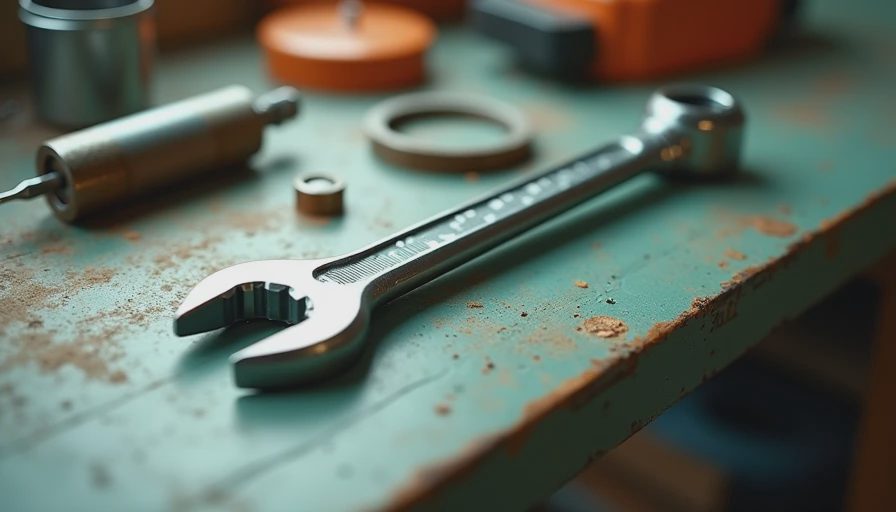
Set the wrench while looking directly at the scale. Engage the lock, fit the correct socket, and pull smoothly from the marked grip area. Stop at the click. Do not add another quarter-turn because the fastener “feels” unfinished. If the instructions call for a sequence, such as wheel lugs, tighten in the specified pattern and make a final pass at the target value.
Torque specifications can change when threads are lubricated. A dry specification is not automatically correct for an oiled or anti-seize-coated fastener because lubrication reduces friction. Follow the instructions for that specific job rather than applying one universal rule.
A five-minute buying formula
My formula is simple: identify the lowest and highest torque values you expect, choose a wrench whose working range comfortably contains them, select the drive size that matches your sockets, and reserve 10 to 20 percent of the budget for quality storage or calibration.
For a homeowner maintaining one vehicle, that usually means a 3/8-inch model for general fasteners and a 1/2-inch model for wheel work. For bicycles, buy a separate low-range 1/4-inch wrench. The best torque wrench is not the longest, most digital, or most expensive option. It is the one you can read, set, store correctly, and use at the specified range without improvising.
I still keep a tape measure in every renovation photo, but the garage now gets a torque wrench too. Trust the measurement, not your eye — or your wrist.