I spent 45 minutes comparing two trash cans and still went home empty-handed. Then I bought a lawn edger in eight minutes because the sidewalk border looked like a bad haircut. The best lawn edger is not automatically the most powerful model or the one with the brightest product photo. It is the tool that matches your lawn size, grass type, storage space, and tolerance for extension cords. Trust the tape, not your eye.
What a lawn edger actually does
A string trimmer cuts grass horizontally and vertically, depending on how you hold it. A lawn edger is more specific: it creates a crisp dividing line between turf and a driveway, sidewalk, patio, or planting bed. That distinction matters around an older house, where concrete edges are rarely perfectly straight and grass has had decades to migrate.
The best lawn edger gives you a controlled blade depth and a guide that keeps the cut consistent. Most homeowners only need about 1 to 2 inches of depth for routine maintenance. Going deeper can expose roots, disturb soil, or create a trench that collects water. I measure the first section before starting, then use it as the visual standard for the rest of the yard. This prevents the classic mistake of making one dramatic section and slowly turning the whole sidewalk into an archaeological dig.
Corded electric edgers generally cost about $60 to $100 and offer steady power without batteries. Battery models commonly land between $100 and $250 before adding a battery platform. Manual rotary edgers can cost $25 to $60, but they require more effort and work best when the existing edge is already defined.
The best lawn edger for a small suburban yard
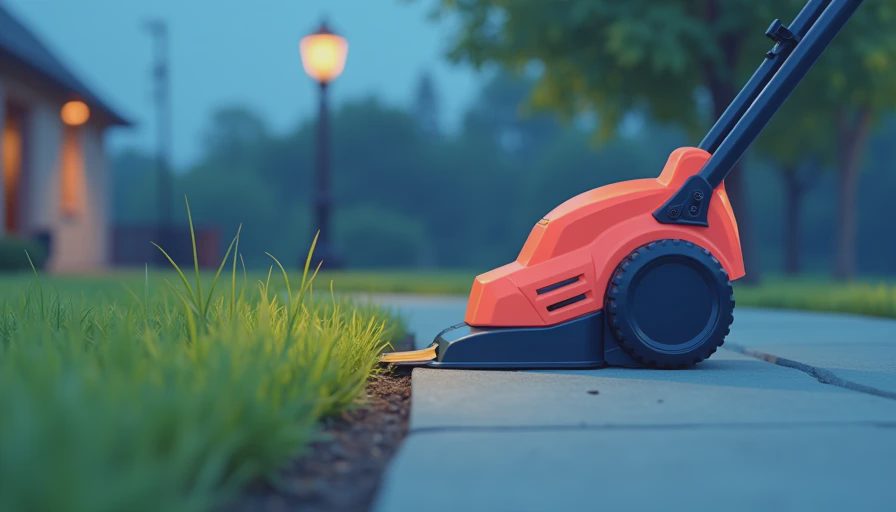
For a compact lot with 100 to 300 feet of edging, a corded model can be the most rational purchase. The cord adds an annoyance, but the motor does not slow as the battery drains. A model such as the Greenworks 27032 is the type of tool I would consider for a homeowner who already has outdoor-rated extension cords and convenient exterior outlets. Check the cutting diameter, guide wheel, and depth adjustment before ordering; those details matter more than a few extra amps.
The best lawn edger in this category should weigh less than roughly 15 pounds, have a visible blade guard, and include a guide wheel that stays in contact with the pavement. If you have to lift the tool repeatedly to correct its path, the guide is not doing its job. A height-adjustable handle is also useful for two people with different heights, although Tim claims every handle adjustment is an invitation to lose the locking pin. He has not yet been proven wrong.
A corded edger is especially practical for front walks and short driveways. For a large backyard, a cord can become a trip hazard and a logistical problem. Use a ground-fault circuit interrupter outlet outdoors, inspect the cord before each use, and keep the cable behind you rather than in the cutting path.
Battery models: higher price, cleaner workflow
The best lawn edger for a larger property is often a battery-powered model because setup takes seconds. Brands including EGO, Ryobi, DeWalt, and Milwaukee sell tools that fit into broader outdoor equipment systems. If you already own a battery platform, staying with that brand can reduce the real cost. Buying a new charger and battery can add $80 to $200, which changes the comparison quickly.
Battery voltage is useful information, not a complete performance rating. A 40-volt or 56-volt tool may have strong cutting ability, but runtime depends on battery capacity, grass density, blade condition, and how aggressively you set the depth. For a typical suburban edging session, a charged 4.0Ah battery is often a more useful starting point than a larger, heavier pack designed for extended mowing.
Look for a metal blade, adjustable shaft, pivoting head, and a replaceable blade that is easy to find. The best lawn edger should also have a comfortable trigger and a lockout that prevents accidental starts. Those are small details until you are holding the tool at an awkward angle beside a rose bed.

Manual edgers still earn their shelf space
A manual half-moon edger or rotary wheel can be the best lawn edger for a narrow garden path, a small townhouse lawn, or occasional touch-ups. It has no charging schedule, no motor noise, and almost nothing to break. I use one around perennial beds where a powered blade feels unnecessarily dramatic. The tradeoff is speed: compact tools are affordable because your shoulders provide the horsepower.
Manual tools work best when the soil is slightly damp but not muddy. Dry clay turns the job into a negotiation, while saturated soil collapses around the cut. Step down firmly, lift the tool, and overlap each cut by an inch or two. A rotary model is easier on the back for long straight runs, but it can struggle when turf has thick runners or the border has disappeared completely.
The best lawn edger for hand work needs a solid shaft, a comfortable foot plate, and a blade that can be sharpened or replaced. Avoid thin plastic guides that flex under pressure. A $35 tool that lasts ten seasons is cheaper than repeatedly replacing a $20 model every other year.
Features worth paying for
Start with the guide wheel. It keeps the blade parallel to the hardscape and makes straight lines easier for a beginner. Next, inspect depth control. A lever or knob that changes the blade position without tools is worth paying for because different areas of a yard rarely have identical soil and turf conditions.
A blade guard should cover the upper portion of the blade and direct debris away from your legs. A pivoting head helps when edging vertically along a curb, while an adjustable handle reduces wrist strain. Weight matters, but balance matters more. A heavier tool can feel manageable if the motor sits close to your body; a lighter tool can feel exhausting if it pulls forward continuously.
The best lawn edger is also easy to maintain. Confirm that replacement blades are sold by the manufacturer or common retailers. After each use, brush away packed soil, inspect the blade, and store the tool somewhere dry. Do not pressure-wash the motor housing. Water has a very predictable relationship with electrical components, and none of it is friendship.
My measured buying formula
I score an edger using five categories: lawn size, edge length, power access, storage, and maintenance. Give each category a score from one to five. A small lawn with an outlet nearby and limited storage points toward corded electric. A large lot with an existing battery system points toward cordless. A short garden border with soft soil points toward manual.
For example, a homeowner with 200 feet of sidewalk, two outdoor outlets, and no compatible batteries might spend $75 on a corded tool instead of $180 on a battery model. Another homeowner with 500 feet of driveway and several compatible Ryobi or EGO batteries may save time with a cordless purchase, even if the tool itself costs more. Price is only one line in the spreadsheet; setup time and replacement parts belong there too.
The best lawn edger should make the border repeatable, not merely impressive on the first Saturday. Buy the guide and depth control before chasing maximum motor power. Measure the edge, choose the power source that fits your property, and reserve 10 minutes after each use for cleanup. That is the system I use now—and it beats staring at lawn tools until the store closes. Trust the tape, not your eye.