I spent 45 minutes comparing two white trash cans once, then bought neither. The closet light took less time to choose because I finally had a system. The best battery operated lights for closet storage are not automatically the brightest, prettiest, or cheapest. They need to fit the space, turn on reliably, and avoid creating one more maintenance job in a 1920s house where nothing is square.
My hall closet has a 24-inch-wide opening, a deep upper shelf, and the usual old-house problem: one dim ceiling fixture that illuminates the doorway and absolutely nothing behind the coats. I wanted light on the floor, light under the shelf, and no electrician visit for a project that should cost less than $60. Tim asked whether the batteries would last. Correct question. Annoying timing.
Start with lumens, not the product photo
For a small closet, 40 to 100 lumens is usually enough for finding shoes or reading labels. A pantry-sized closet or walk-in storage area needs closer to 100 to 200 lumens, especially if the shelves are dark wood. Lumens measure the amount of visible light; watts mainly describe energy use, so watts are not useful for comparing modern LED products.
The best battery operated lights for closet storage should also spread light across the shelf instead of producing a bright coin of light in one spot. A long bar light generally works better under a 30-inch shelf than a round puck mounted in the center. For a narrow linen closet, two small pucks can eliminate shadows between folded towels. I prefer a neutral white color temperature around 3,000 to 4,000 Kelvin. Very warm light looks pleasant but makes navy and black clothing harder to distinguish.
Read the stated lumen rating with some skepticism. A $12 light advertised as “super bright” may provide less useful coverage than a $25 bar with a diffuser. The five-minute test is simple: hold the light at the planned mounting height, open the door, and check whether the back corner is still dark. Trust the tape, not your eye.
Motion sensors beat wall switches in most closets
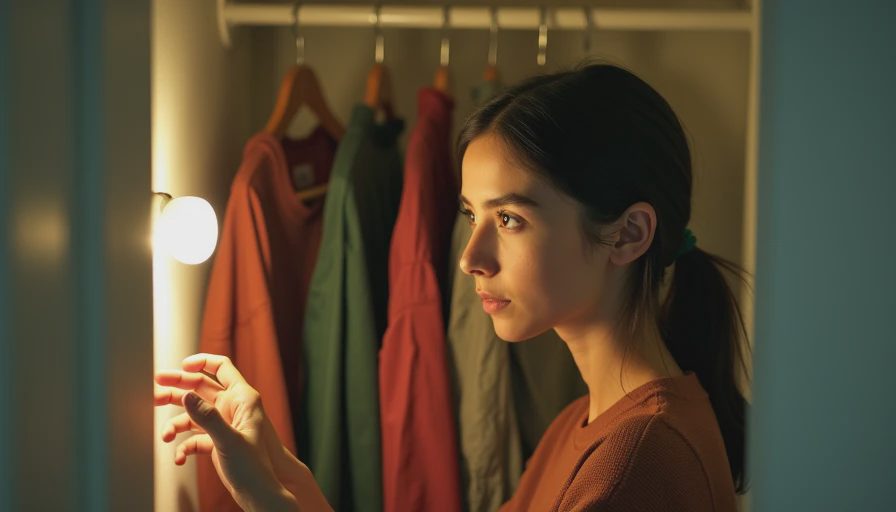
A motion sensor is the feature that makes these lights worth buying. Your hands are often full of laundry, a vacuum attachment, or the dog’s leash. Pressing a tiny button with your elbow is not a sustainable lighting plan.
Look for adjustable auto-off timing when possible. Thirty seconds works for a coat closet, while two or three minutes is more practical for sorting seasonal clothing. A light that shuts off after 10 seconds will create a frustrating sequence of waving, reaching, and waving again. I tested one inexpensive puck that interpreted every shelf movement as a reason to turn off. It went back to the hardware drawer within a week.
The best battery operated lights for closet storage should activate consistently when the door opens or when a person moves inside. Door-triggered lights use a magnetic contact and can be excellent for small closets, but installation requires careful alignment. Motion models are more flexible and usually mount with adhesive or screws. If your closet faces a sunny window, check whether the sensor ignores daytime light; otherwise, it can waste batteries when the room is already bright.
Choose the power source with replacement cost in mind
Most closet lights use AAA batteries, AA batteries, or a built-in rechargeable lithium battery. Replaceable batteries are convenient for a rental or a rarely used guest closet. Rechargeable models create less disposable waste and can be cheaper over several years, but only if the charging port remains accessible after installation.
A four-pack of quality AA alkaline batteries may cost $4 to $8. If a light uses three batteries and lasts six months, that is a manageable annual expense. Cheap zinc batteries can leak, particularly in a warm attic closet, so I avoid them. Rechargeable AA batteries cost more upfront but make sense in a mudroom or frequently opened wardrobe.
For the best battery operated lights for closet storage, check whether the product allows normal operation while charging. Some USB-rechargeable bars become useless until removed from the wall. That is a design flaw, not a minor inconvenience. Also inspect the charging connection: USB-C is easier to replace than a proprietary cable that disappears into the junk drawer ecosystem.
Mounting matters more than a decorative finish
Adhesive backing is fast, but old painted plaster and dusty melamine shelves are not reliable surfaces. Clean the mounting area with rubbing alcohol, let it dry, and press firmly for at least 30 seconds. Give the adhesive several hours before hanging the light if the instructions allow it. I learned this after a puck detached at 2 a.m. and rolled under the dresser like a tiny glowing hockey puck.
Magnetic lights are easier to remove for charging and battery replacement. If the mounting plate uses screws, measure twice before drilling. A 14-inch bar needs a reasonably flat section and enough clearance for the door. In a shallow closet, leave at least 1 inch between the fixture and the door swing. This is where a tape measure beats a product thumbnail every time.
Avoid placing a light directly behind a front shelf lip. The fixture can be bright while the usable storage surface stays shadowed. Under-shelf mounting, aimed toward the back wall, usually produces better coverage. The best battery operated lights for closet storage are positioned to illuminate objects, not merely the ceiling.
Three practical setups by closet type
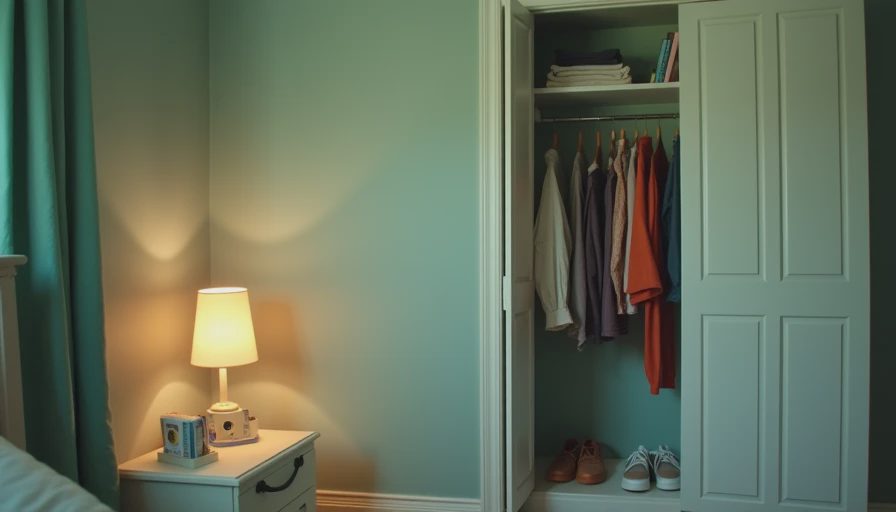
For a coat closet, use one 40- to 80-lumen motion-sensor puck near the upper front area. It should illuminate shoes and jacket pockets without shining directly into your eyes. Expect to spend $10 to $20. A door-triggered strip is also effective if the closet is narrow and the door closes completely.
For a linen closet, use a 12- to 18-inch rechargeable bar under the middle shelf, usually in the 100- to 150-lumen range. If the closet is wider than 30 inches, two shorter lights often distribute illumination better than one intense center fixture. Budget $20 to $40, depending on battery size and mounting hardware.
For a walk-in closet, use two or three fixtures rather than one powerful light. Place one near the entry, one over the hanging section, and one by drawers or shoe storage. Total cost can land between $40 and $90. The best battery operated lights for closet storage in this category should have a longer timeout and a sensor that does not trigger from every small movement outside the closet.
My buying formula for avoiding a drawer full of mistakes
Measure the mounting surface first. Record width, depth, door clearance, and the distance from the floor to the lowest shelf. Then choose 40 to 100 lumens for a small coat closet, 100 to 200 lumens for deeper storage, a 3,000- to 4,000-Kelvin color temperature, and motion activation with a useful timeout.
Next, calculate access. If you cannot reach the light without a step stool, rechargeable power is less convenient than replaceable batteries. If the surface is uneven or dusty, favor a magnetic plate with screws over adhesive alone. If the closet is used several times daily, spend more for a larger battery and a diffused bar.
Finally, test the actual result at night. Open the door, stand where you normally stand, and look at the back corner and floor. If both are visible without squinting, the setup works. If not, add a second low-cost fixture rather than replacing everything with an unnecessarily bright lamp. The best battery operated lights for closet storage are the ones that match the geometry of your closet and remain easy to live with.
My final setup cost $34: one rechargeable bar under the shelf and one small sensor puck near the floor. No wiring, no drywall repair, and no second trip to the store. Measure first, buy for the shadows, and trust the tape, not your eye.